
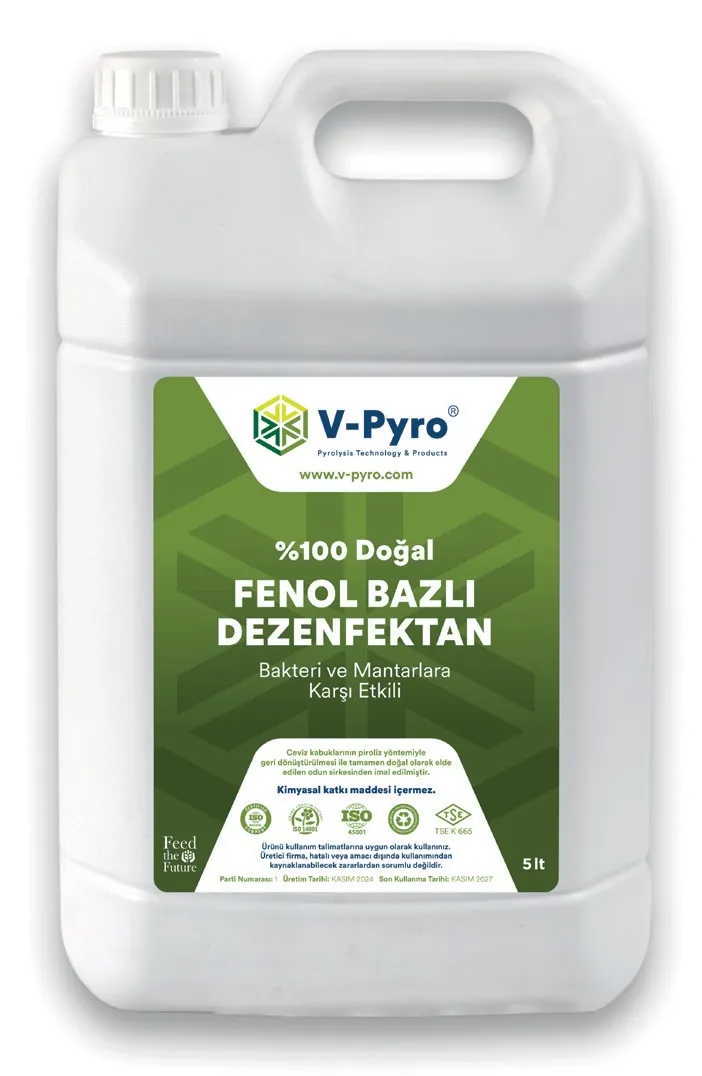
Hygiene
Phenol-Based Natural Disinfectant
Wood Vinegar · Against bacteria and fungi
This natural phenol-based disinfectant, made from wood vinegar obtained from the pyrolysis of olive pits, walnut shells and apricot kernels, is an effective cleaning and disinfecting product against bacteria, fungi and other microorganisms, thanks to its high phenol and organic acid content.
- > 5 logReduction of bacteria and fungi · EN 1276 / EN 1650, 80% concentration
- 1:100Dilution for general disinfection
- 5 minContact time in the TS EN 1276 bacteria test, dirty conditions
What is Phenol-Based Natural Disinfectant?
Phenol-Based Natural Disinfectant is a cleaning and disinfecting product based on wood vinegar from the pyrolysis of olive pits, walnut shells and apricot kernels. Thanks to its high phenol and organic acid content, it is effective against bacteria, fungi and other microorganisms. It is used in barns, poultry houses and pens, on surfaces and equipment, and in waste containers.
From barns to pools, against bacteria and fungi.
Made from natural ingredients, it is an eco-friendly solution with a wide range of applications.
Animal shelters
Used for disinfecting barns, poultry houses, pens and other animal shelters.
Swimming pools
Used to clean pool surfaces and equipment.
Waste containers
Used to clean waste containers and prevent odour and microbial growth.
Sewers and drainage lines
Used to prevent the growth of bacteria and fungi.
Areas prone to fungal and bacterial growth
Used on surfaces in bathrooms, toilets, kitchens, floors and walls.
Industrial settings
Used for disinfecting food businesses, hospitals, schools and other communal living spaces.
Phenols break down the cell membranes of microorganisms.
Wood vinegar is a dark-coloured, sharp-smelling liquid obtained through the pyrolysis of woody biomass. It contains natural phenols, acetic acid, methanol, aldehydes and esters, compounds known especially for their antibacterial, antifungal and antiviral properties. Phenolic compounds disrupt microbial cell membranes, rendering them inactive; this makes pyroligneous acid a natural and biodegradable disinfectant.
- Component
- Phenols
- Component
- Acetic acid
- Component
- Aldehydes and esters
- Test sample · acetic acid
- 9% (w/w)
1:100 for general disinfection, 1:50 for heavy soiling.
| Application | Rate | Frequency | Source |
|---|---|---|---|
| General disinfection1 litre of product mixed with 100 litres of water (≈ 1%)Disinfection | 1:100 | Daily or weekly as needed | Manufacturer's recommendation |
| Heavily soiled and contaminated areas1 litre of product mixed with 50 litres of water (≈ 2%)Disinfection | 1:50 | Daily or weekly as needed | Manufacturer's recommendation |
Dilute, spray or wipe; no rinsing needed.
- 01
Dilute
For general disinfection, mix 1 litre of product with 100 litres of water (1:100); for heavily soiled and contaminated areas, mix 1 litre with 50 litres of water (1:50).
- 02
Apply to surfaces
Spray or wipe the prepared solution onto surfaces. Rinsing is not required after application.
- 03
Immerse
Small tools and equipment can be disinfected by immersion.
- 04
Repeat
Apply daily or weekly as needed.
Usage warnings
- Use of protective equipment is recommended, especially for intensive applications.
- Use the product in accordance with the instructions for use. The manufacturer is not responsible for any damage resulting from incorrect use or use other than intended.
Safety information
- Signal word
- Warning
- Hazard statements
- H315 Causes skin irritation.
- H319 Causes serious eye irritation.
- Precautionary statements
- P264 Wash hands thoroughly after handling.
- P302+P352 IF ON SKIN: Wash with plenty of water.
- P305+P351+P338 IF IN EYES: Rinse cautiously with water for several minutes. Remove contact lenses, if present and easy to do. Continue rinsing.
Bactericidal and fungicidal tests in an accredited laboratory.

> 5 log
Over 99.999% reduction. In the TS EN 1276 bactericidal (5 minutes contact) and EN 1650 fungicidal (15 minutes contact) tests, at 80% test concentration and under dirty conditions, V-Pyro wood vinegar was effective against Staphylococcus aureus, Pseudomonas aeruginosa, Enterococcus hirae, Escherichia coli, Candida albicans and Aspergillus brasiliensis. The tests were carried out and reported in line with the Turkish Ministry of Health disinfectant test method.
Nanolab Laboratuvar Hizmetleri (TÜRKAK AB-2023-T) · Test reports T25-3971/0 and T25-3972/0 · 01.08.2025
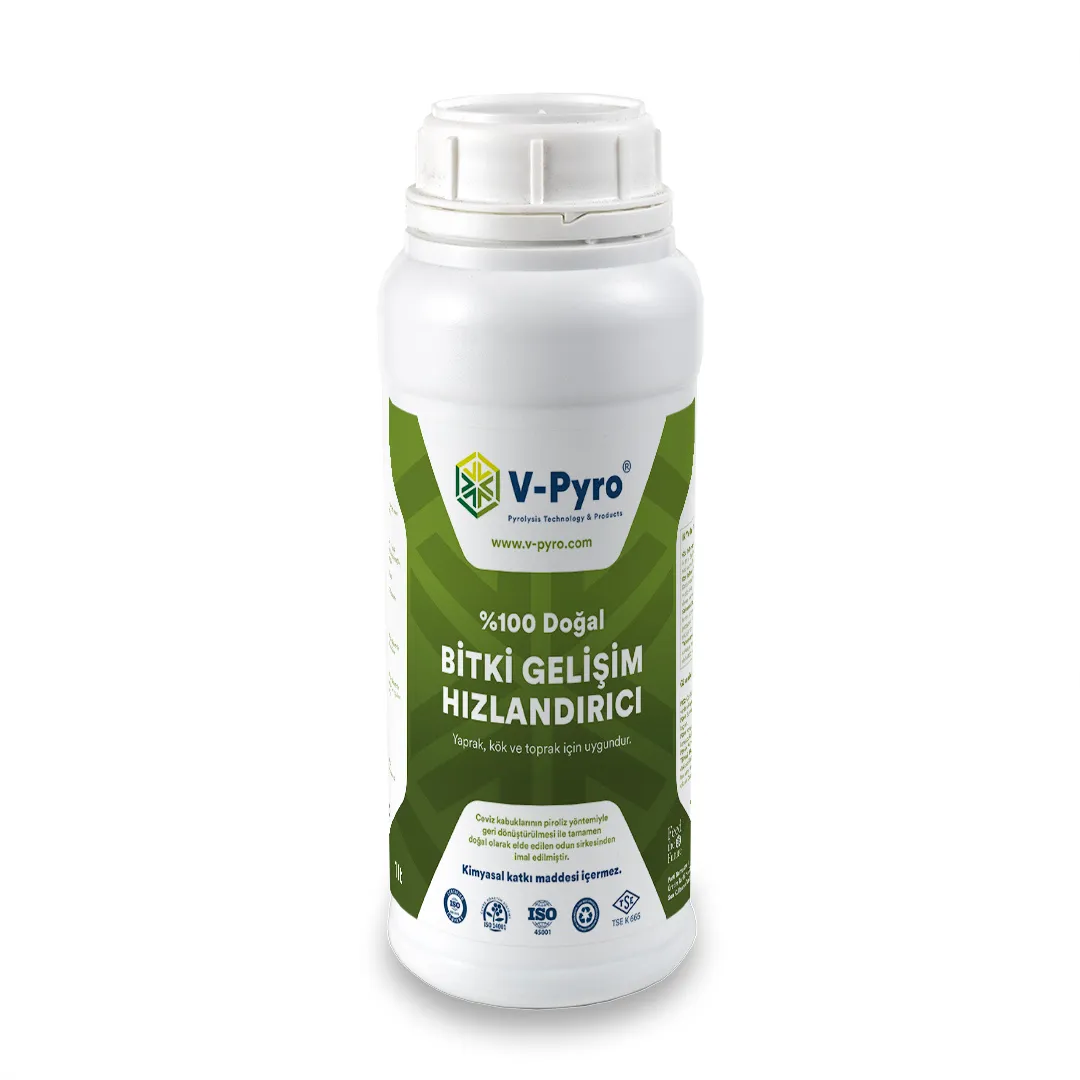 Agriculture and soil
Plant Growth Regulator
Wood vinegar for root, leaf and fruit development, applied to leaves and soil.
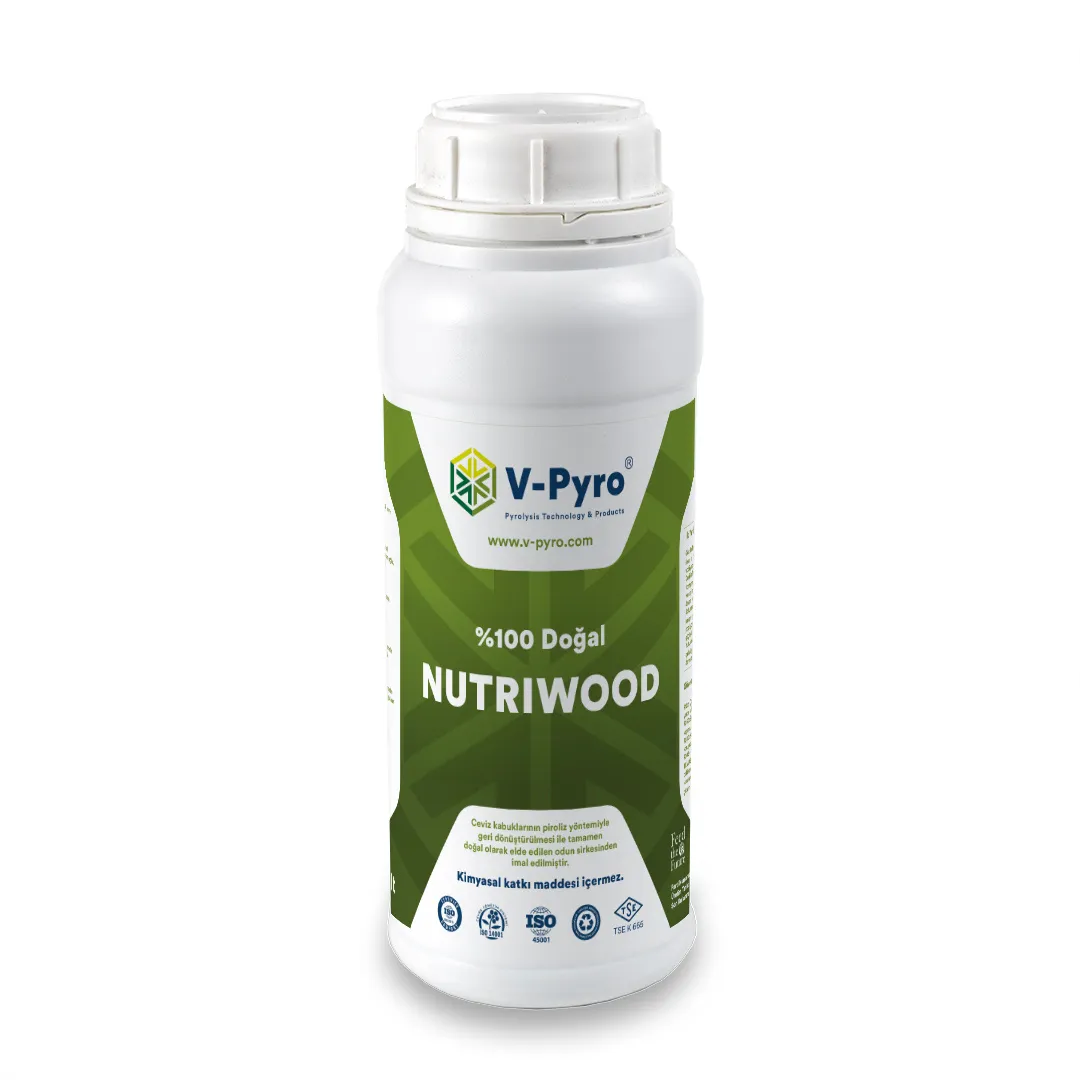 Agriculture and soil
NUTRIWOOD
Wood-vinegar plant nutrition additive for organomineral fertiliser systems.
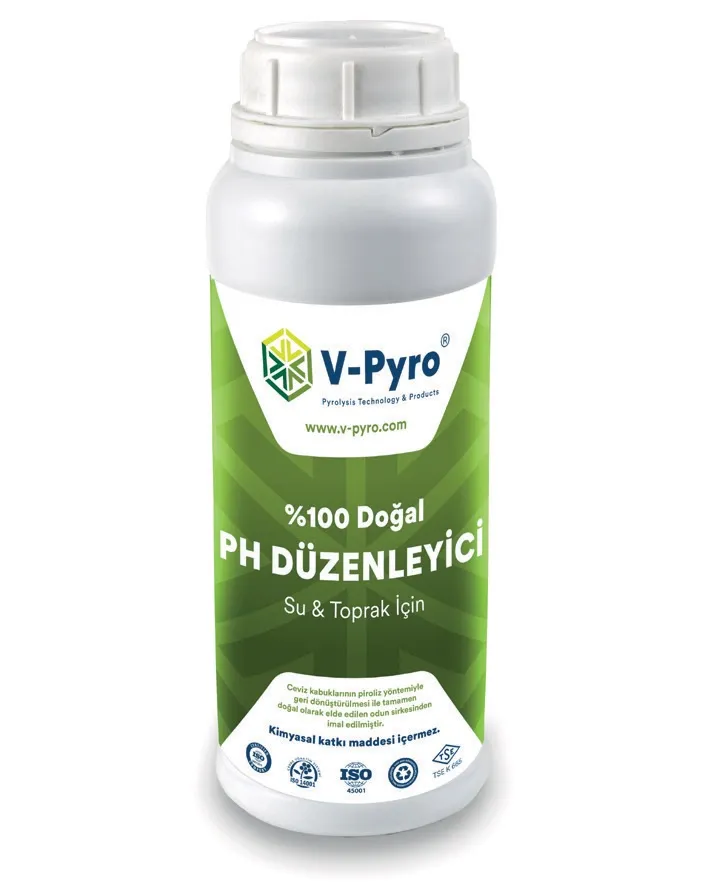 Agriculture and soil
pH Regulator
Natural wood-vinegar pH regulator for soil, foliar and hydroponic use.
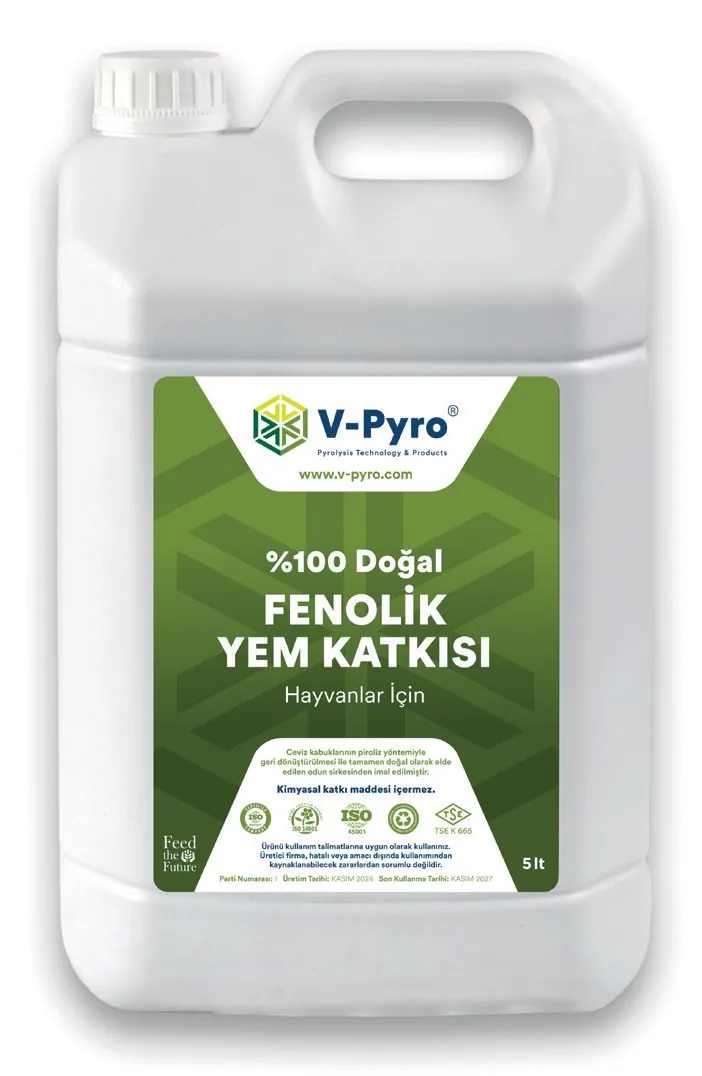 Livestock
Phenolic Feed Additive
Wood-vinegar based natural feed additive for drinking water.
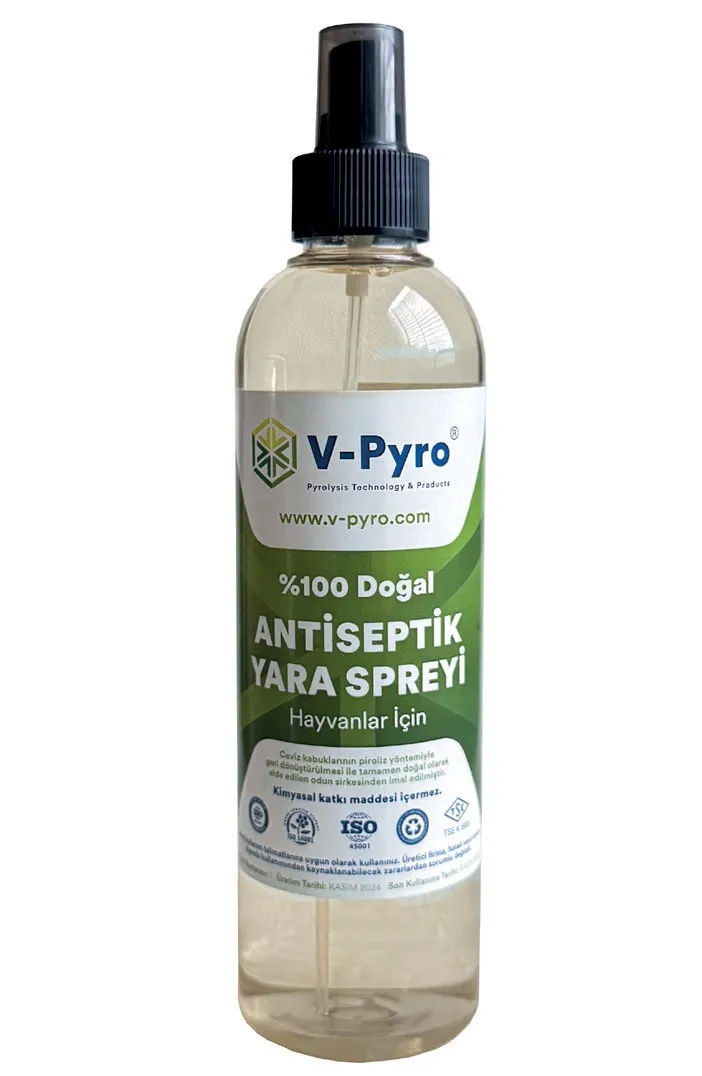 Livestock
Skin Care Spray
Wood-vinegar based wound and skin care spray for animals.
Try it in the field.
Request a sample or find your nearest authorised dealer.