
Agriculture and soil
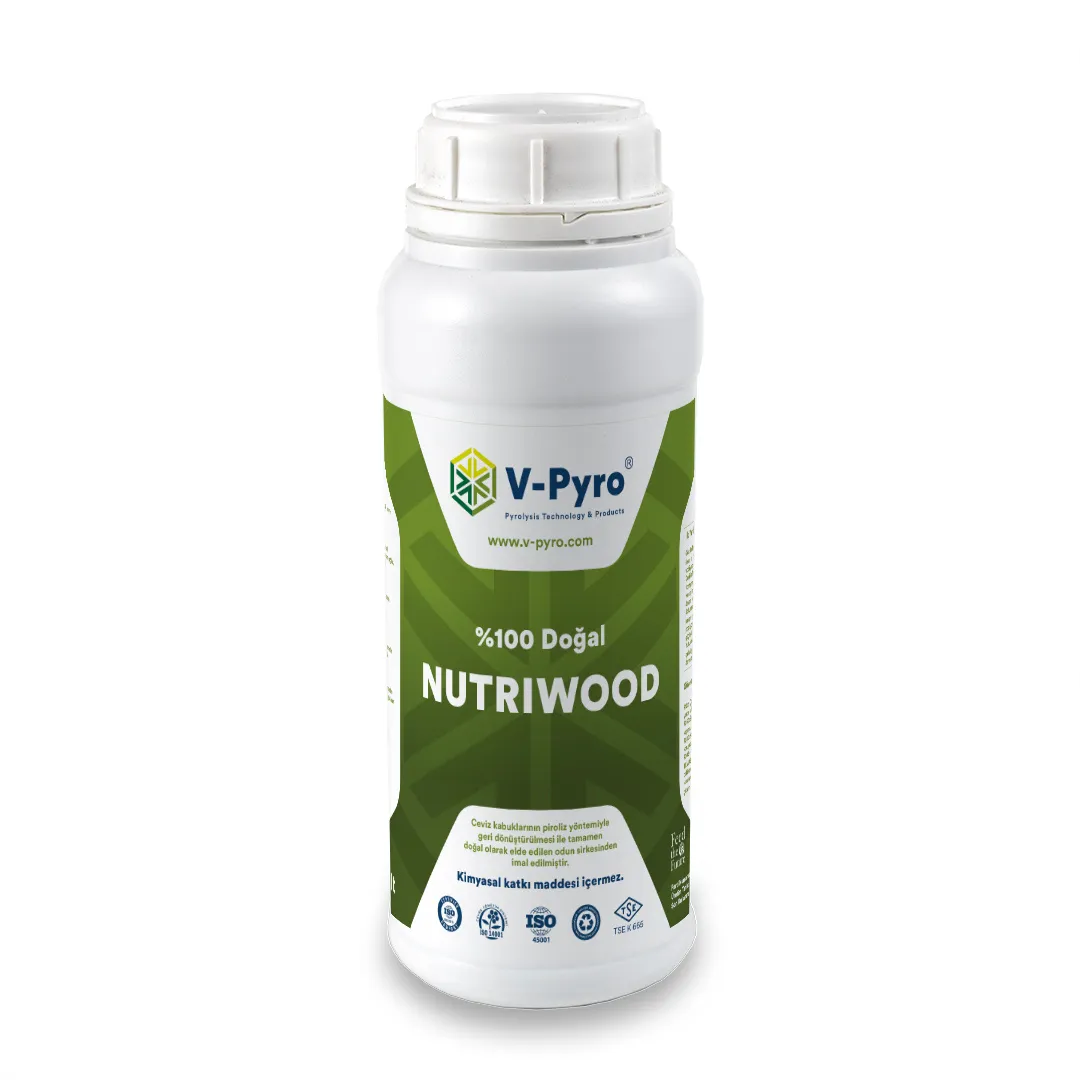
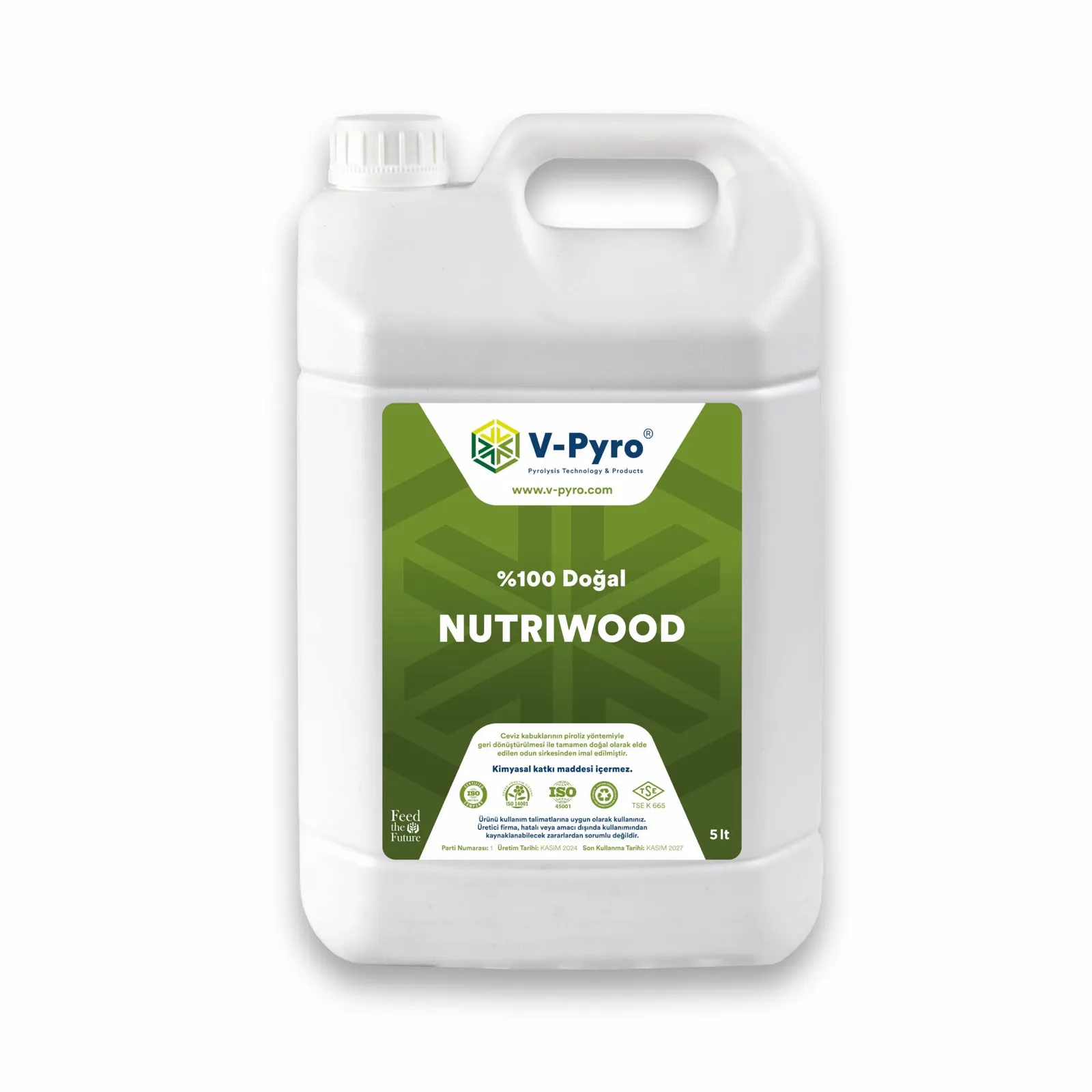
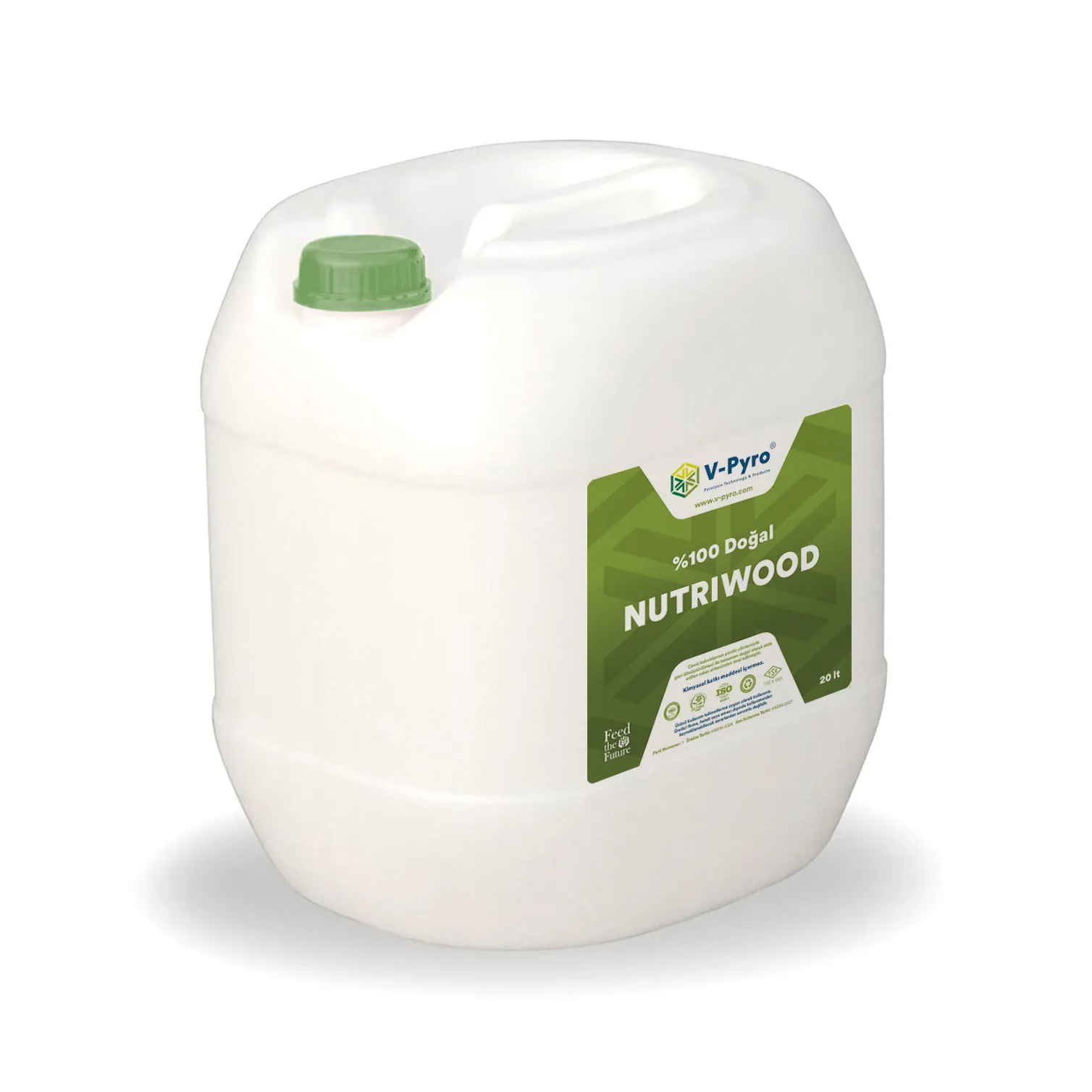
NUTRIWOOD
Wood Vinegar · Plant nutrition additive
A 100% natural liquid obtained by the slow pyrolysis of organic agricultural waste under oxygen-free conditions. As an additive in organomineral fertiliser systems, it balances soil microbial structure, regulates pH and improves nutrient uptake.
- 1–2%Added to compost or fertiliser
- 15–20Days between applications
- 100%Natural · no synthetic additives
What is NUTRIWOOD?
NUTRIWOOD is a natural wood vinegar with no synthetic additives, obtained by pyrolysing organic agricultural waste without oxygen. As an additive in organomineral fertiliser systems, it balances soil microbial structure, regulates pH and improves nutrient uptake. In greenhouses and open-field farming it is applied to the leaves or the soil, or mixed into compost or fertiliser.
A natural additive that makes fertiliser work harder.
V-PYRO Wood Vinegar (Pyroligneous Acid) is a 100% natural liquid product obtained by the slow pyrolysis of organic agricultural waste under oxygen-free conditions. It is used as an additive in organomineral fertiliser systems for plant nutrition, soil improvement and enhancing fertiliser efficiency. It balances soil microbial structure, regulates pH and improves nutrient uptake.
Foliar application
Acts as a plant growth regulator and improves resistance to diseases.
Soil application
Revitalises soil microbiota and enhances fertiliser effectiveness.
Seedlings
Promotes root development.
Mixed with organic fertiliser
Boosts efficacy and reduces odours.
Greenhouse and open field
Supports plant health and growth in greenhouses and open-field farming.
Organic acids, phenols and trace minerals; no synthetic additives.
The whole composition comes from a natural pyrolytic process. The main organic acid is acetic acid; alongside phenolic compounds, other organic acids and volatile compounds, minerals and nitrogen compounds are present in trace amounts.
- Process
- Slow oxygen-free pyrolysis
- Main component
- Acetic acid · 3–7%
- Phenolics
- Guaiacol, cresol, phenol
- Use
- Organomineral fertiliser additive
Composition (qualitative and quantitative structure)
| Component group | Substance | Percentage (%) | Function |
|---|---|---|---|
| Main organic acid | Acetic acid | 3 – 7 | pH regulator, root development stimulator |
| Phenolic compounds | Guaiacol, cresol, phenol | 0.5 – 2.0 | Microbial activity regulator, antifungal |
| Other organic acids | Propionic, butyric, formic | 0.2 – 0.5 | Microbial balance, growth regulator |
| Nitrogen compounds | Amino group compounds | Trace amounts | Supplementary nitrogen source for plants |
| Volatile organic compounds | Esters, ketones, aldehydes | <0.5 (aldehydes <0.2) | Scent carrier, microbial effects |
| Minerals | K, Ca, Mg, Fe, Zn | <0.2 (trace elements) | Complementary nutrients for plant metabolism |
| Water | — | 85 – 90 | Main carrier; ensures solution homogeneity |
On the leaf and in the soil, every 15–20 days.
Can be applied at the start of the vegetative stage and during the growth period at 15–20 day intervals.
| Application | Rate | Frequency | Source |
|---|---|---|---|
| Foliar applicationDiluted with water and sprayedNutrition | 1:200 – 1:300 | Every 15–20 days | Manufacturer's recommendation |
| Soil applicationAdded to the irrigation systemNutrition | 1:100 – 1:200 | Every 15–20 days | Manufacturer's recommendation |
| Fertiliser additiveMixed into compost or fertiliserNutrition | 1 – 2% | — | Manufacturer's recommendation |
Dilute, apply, repeat every 15–20 days.
- 01
Dilute
Dilute with water at 1:200 – 1:300 for foliar use, or at 1:100 – 1:200 for soil use.
- 02
Apply
Spray the foliar solution; add the soil solution to the irrigation system.
- 03
Add to fertiliser
As a fertiliser additive, mix 1–2% into compost or fertiliser.
- 04
Repeat
Repeat at 15–20 day intervals from the start of the vegetative stage and through the growth period.
Safety information
- Signal word
- Warning
- Hazard statements
- H315 Causes skin irritation.
- H319 Causes serious eye irritation.
- Precautionary statements
- P264 Wash hands thoroughly after handling.
- P302+P352 IF ON SKIN: Wash with plenty of water.
- P305+P351+P338 IF IN EYES: Rinse cautiously with water for several minutes. Remove contact lenses, if present and easy to do. Continue rinsing.
Microbial activity, root development, photosynthesis.

The acetic acid and phenolic compounds in wood vinegar stimulate microbial activity in the soil and support root development. Research shows that it enhances plant access to nutrients, which in turn increases the rate of photosynthesis. It is particularly valued in organic agriculture for reducing the need for pesticides and for rehabilitating soil health.
Ogawa & Okimori, 2010
 Agriculture and soil
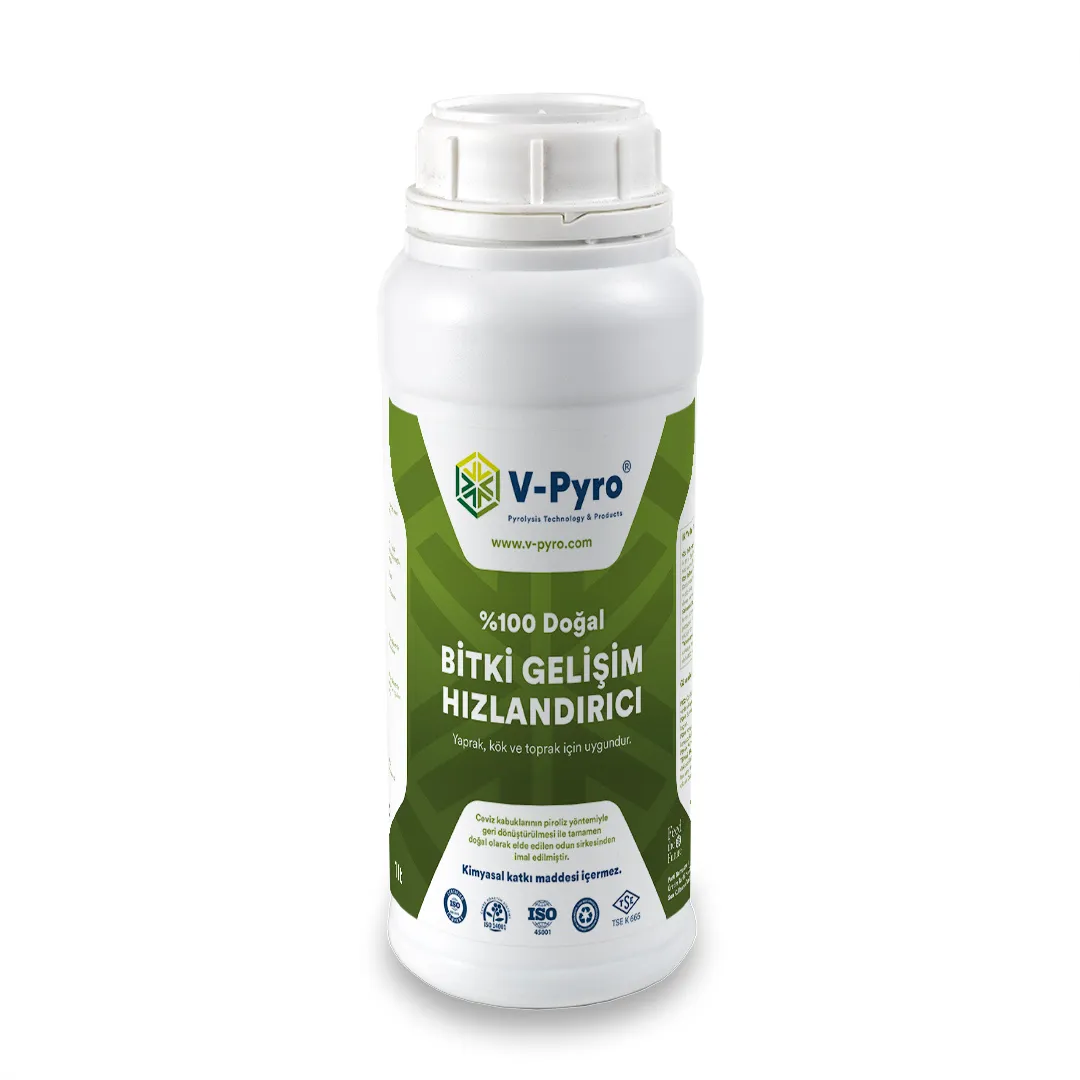
Plant Growth Regulator
Wood vinegar for root, leaf and fruit development, applied to leaves and soil.
 Agriculture and soil
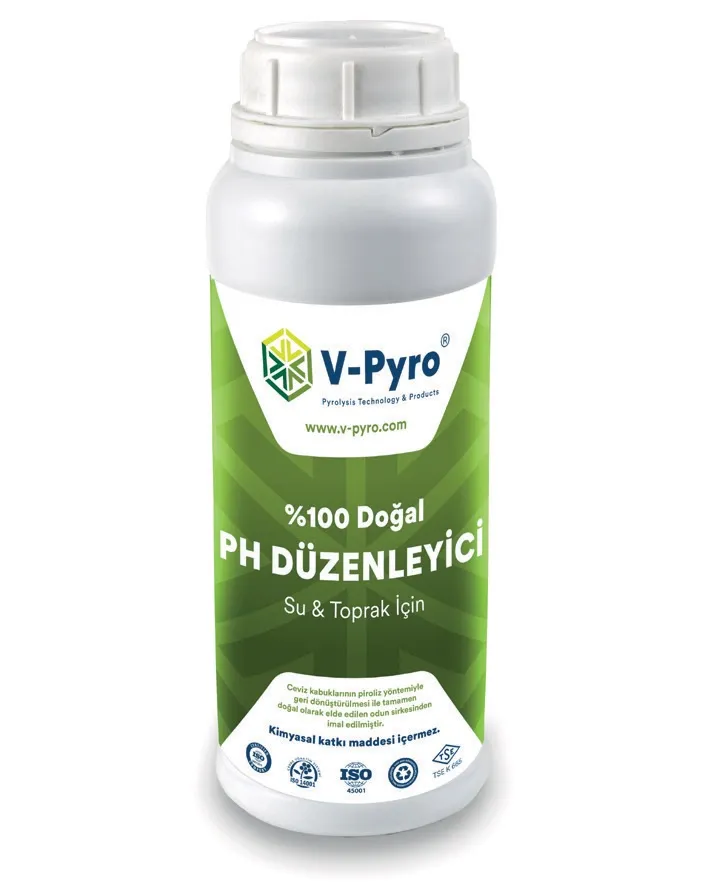
pH Regulator
Natural wood-vinegar pH regulator for soil, foliar and hydroponic use.
 Livestock
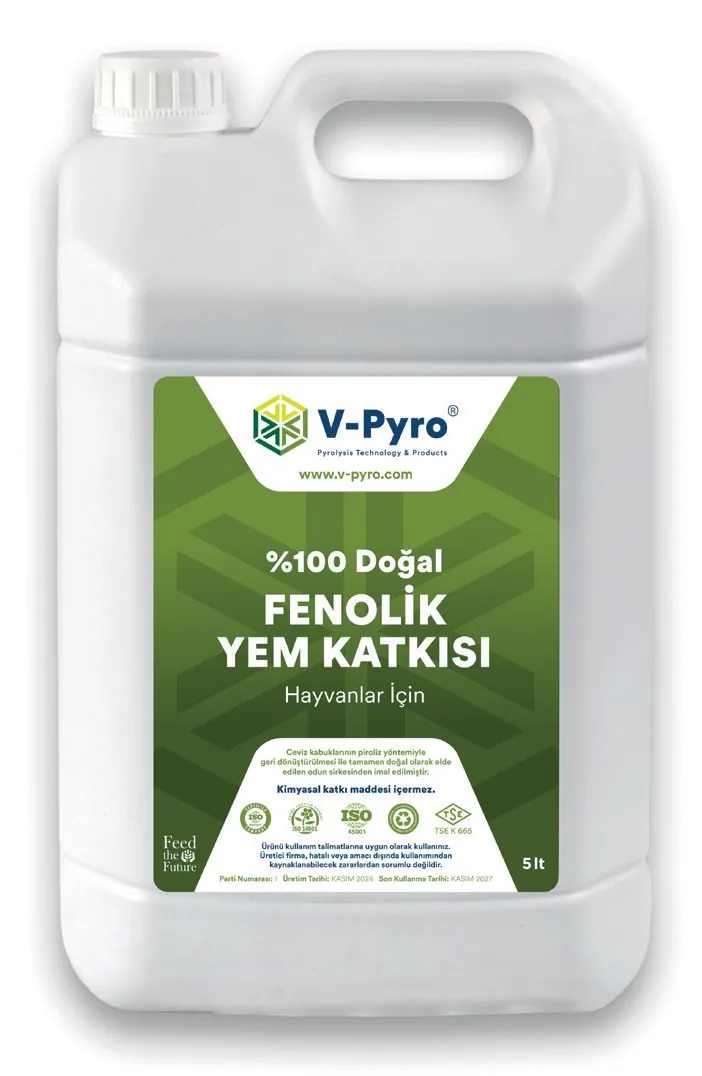
Phenolic Feed Additive
Wood-vinegar based natural feed additive for drinking water.
 Hygiene
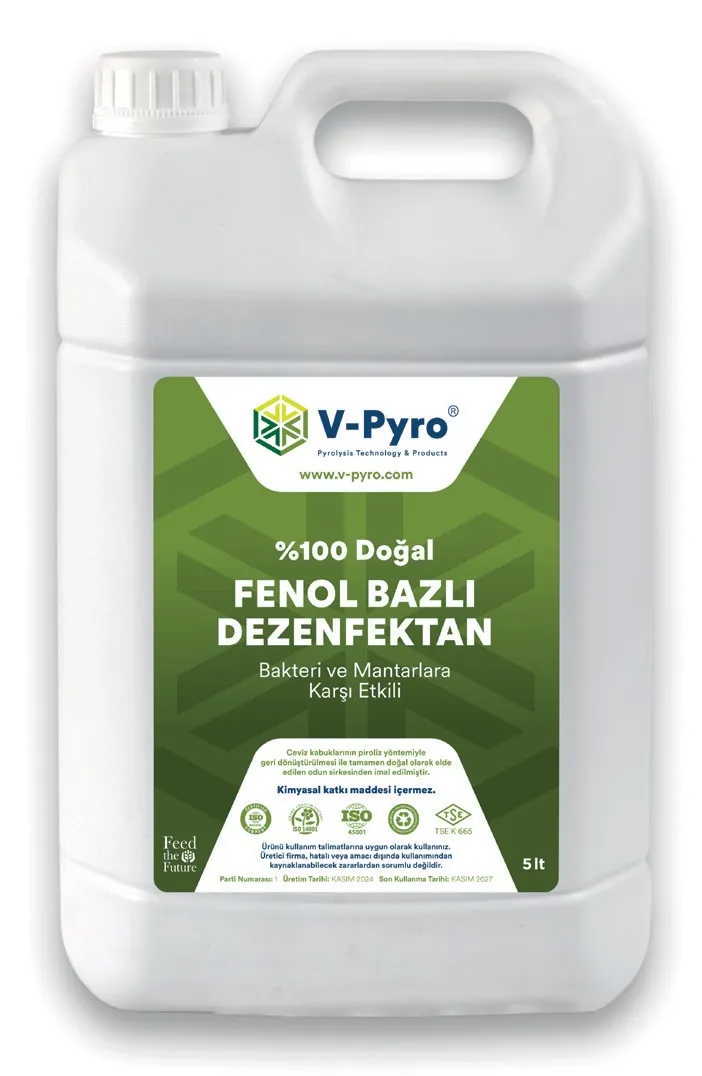
Phenol-Based Natural Disinfectant
Wood-vinegar based natural disinfectant for barns, surfaces and equipment.
 Livestock
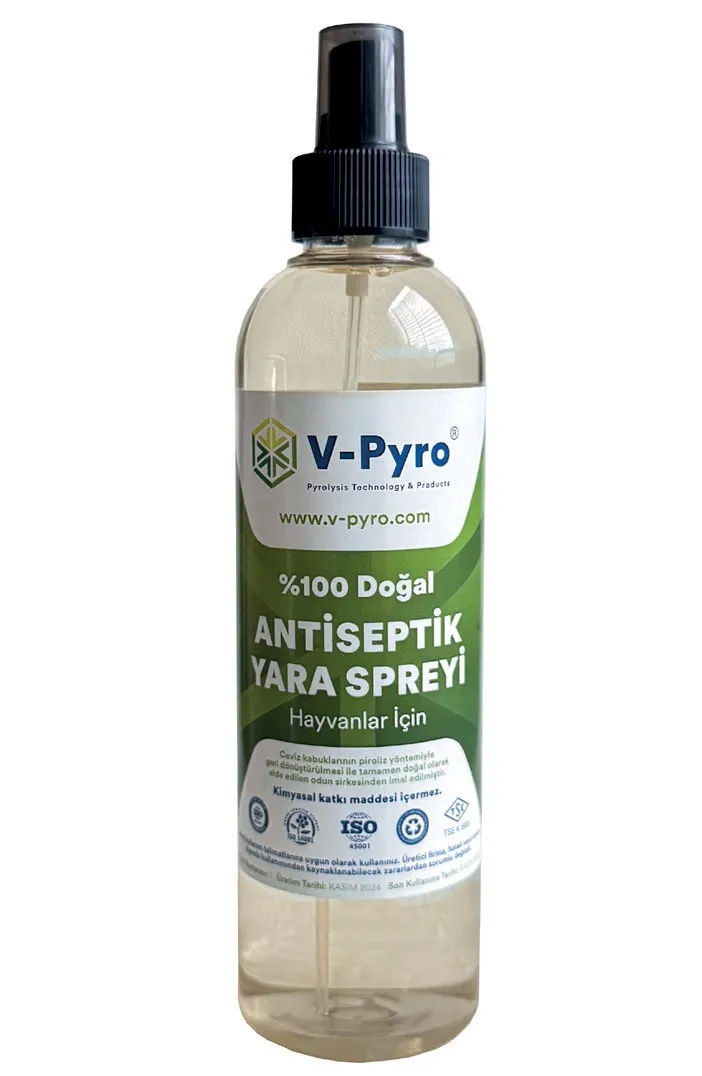
Skin Care Spray
Wood-vinegar based wound and skin care spray for animals.
Try it in the field.
Request a sample or find your nearest authorised dealer.