

Patented pyrolysis, circular biorefinery.
Home-grown technology that turns agricultural waste into three valuable products at 700°C without oxygen.
Get to know our technology.
The pyrolysis process, the circular biorefinery model, our R&D work and our production plant each have their own page.
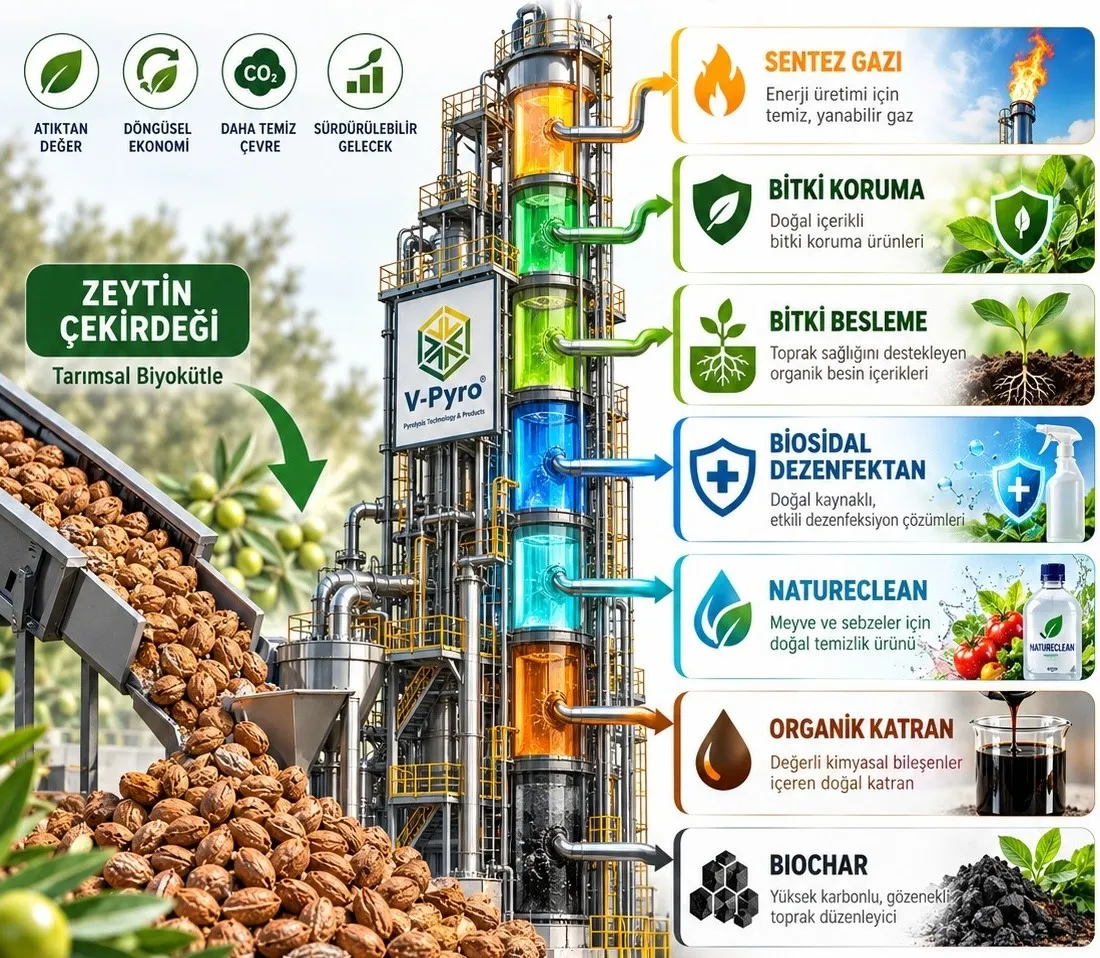 Enlarge image: Turkish-language V-Pyro biorefinery infographic; olive pits, the agricultural biomass, enter the pyrolysis column, which yields syngas, plant protection and plant nutrition products, a biocidal disinfectant, NatureClean fruit and vegetable cleaner, organic tar and biochar (opens in a new tab)
Pyrolysis Technology
Thermochemical decomposition without oxygen
Circular Biorefinery
From feedstock to three product phases, zero waste
Patented Reactor & R&D
Ministry-approved reactor project · TÜBİTAK 1505 · R&D team
Production Plant
Mersin Agropark / Tarsus
Pyrolysis, step by step.
More videos on the process and our products are in the Video Centre. All videos →
How Does Pyrolysis Work?
A short video (in Turkish) that uses a small demo kit to show, step by step, how pyrolysis recycles organic waste. As the waste is heated without oxygen it releases water vapour, then a hydrogen-rich gas, wood tar and wood vinegar; when pyrolysis is complete, solid carbon (biochar) is left behind.
Cleaning today for tomorrow.
The power to make a difference lies in how we see waste. At our plant, agricultural waste such as olive pits, walnut shells and apricot kernels is heated without oxygen through pyrolysis and split into three product phases: biochar in the solid phase, pyroligneous acid (wood vinegar) in the liquid phase and wood tar in the heavy fraction.
These products return to the soil, to plants, to livestock farming, to hygiene and to industry; waste becomes a valuable raw material. The process is explained on the Pyrolysis Technology page, and where the products go on the Circular Biorefinery page.
Try the three product phases in the field.
Request a sample or find your nearest authorised dealer.