
Agriculture and soil
Pyroligneous Acid
Wood Vinegar · Liquid Smoke · Smoke Water
Pyroligneous acid (also known as wood vinegar, liquid smoke or smoke water) is an excellent natural fertiliser for your garden and an effective biostimulant for plants: it promotes plant growth and enhances uptake through the roots. It is 100% natural, produced without any added chemicals from organic, sustainably sourced local waste biomass. Bulk supply is available.
- 85%Up to 85% suppression against Fusarium
- 100%Natural, from agricultural waste
- K 665TSE criteria conformity certificate (TSEK)
What is Pyroligneous Acid?
Pyroligneous acid (wood vinegar) is a natural liquid obtained by pyrolysing biomass without oxygen. It is made from agricultural waste such as olive pits, walnut shells and apricot kernels, and contains organic compounds including acetic acid, phenols and ketones. It is used in agriculture as a natural fertiliser and biostimulant, and in feed additive and hygiene products.
Improves soil, supports growth, suppresses microbes.
Wood vinegar contains various organic compounds, has high biological activity and plays an important role in plant growth and human health. With its antibacterial, antiseptic and deodorising properties it is widely used in agriculture, horticulture, animal husbandry and environmental protection, as well as in food processing, health and medicine: soil improvement, promoting plant growth, animal feed additives and wastewater treatment are some examples.
Improves soil
Enhances soil properties, reducing the need for fertilisers, and improves soil conditions for a stronger root mass.
Healthy growth
Supports healthy plant growth and reduces soil pollution. Promotes growth by improving uptake through the roots.
Nutrient and fertiliser efficiency
Supports nutrient uptake and extends shelf life; increases nutrient use efficiency and the effectiveness of applied fertilisers.
Stress tolerance
Increases tolerance to abiotic stresses such as salinity and drought, and raises tolerance to sodium (Na).
Bacteria, fungi and pest control
With its sterilising and antibacterial properties it has inhibitory and destructive effects on various microbes and viruses. It partially sterilises soil, reducing the proliferation of bacteria, fungi and insects, and can prevent the proliferation of unwanted bacteria and the development of pests.
Multipurpose use
Can be used as a fertiliser, herbicide, composting aid and feed additive for farms.
The liquid phase of 700°C oxygen-free pyrolysis.
Wood vinegar is a natural, eco-friendly product obtained through the pyrolysis (thermal decomposition) of biomass. Agricultural waste such as olive pits, walnut shells and apricot kernels is decomposed without oxygen in our patented reactor; the condensed vapour forms pyroligneous acid containing organic compounds such as acetic acid, phenols and ketones, then passes through two-stage filtration. During production, approximately 1.5 kg of CO₂ is removed from the atmosphere for every litre produced: an eco-friendly, carbon-negative process.
- Component
- Acetic acid
- Component
- Phenols
- Component
- Ketones
- Process
- Two-stage filtration
Parameters
| Property | Value |
|---|---|
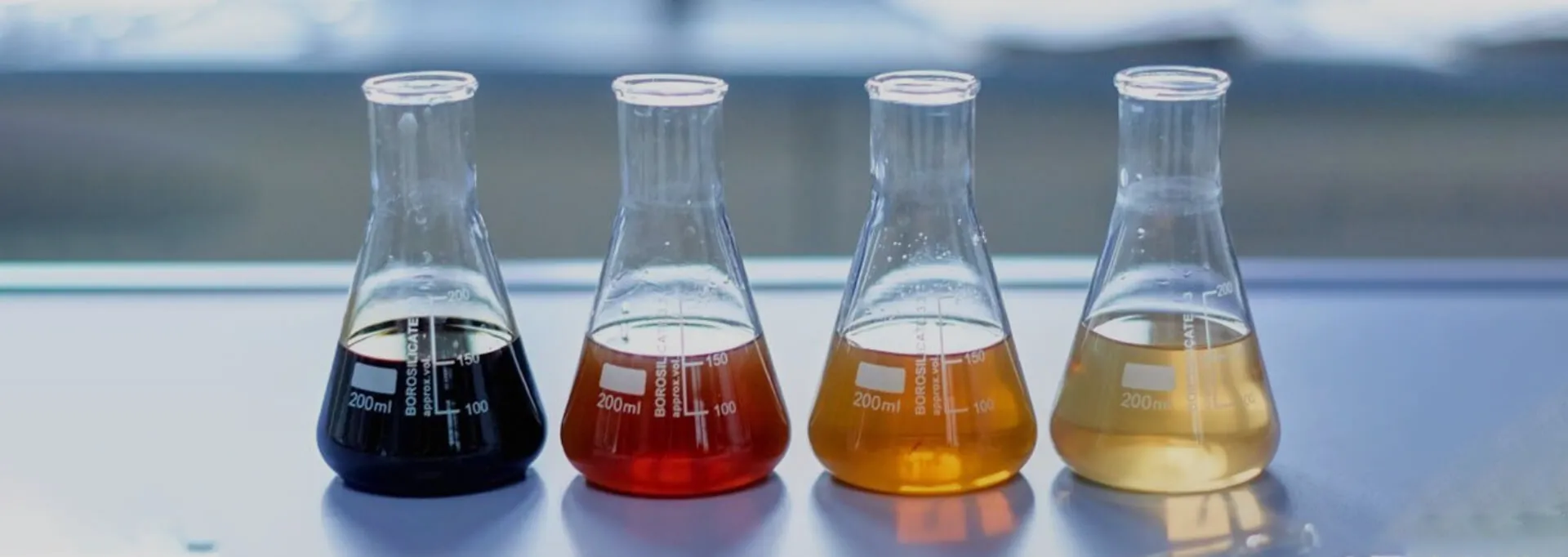
| Appearance | Acidic liquid with a yellow or light yellow colour |
| Main components | Various organic compounds such as acetic acid, phenols and ketones |
| pH | Generally 2–4; exact values depend on density and composition |
| Density | Similar to water, typically 1.0–1.1 g/cm³ |
| Boiling point | Relatively low, usually 100–110 °C |
| Flash point | Relatively high; not easily flammable |
| Solubility | Miscible with water in any ratio; slightly soluble in organic solvents |
How the organic-waste recycling chain works in municipalities
| Step | Process |
|---|---|
| A | Waste collected by refuse teams is sorted and dried. |
| B | The waste is ground and the recycling process begins in pyrolysis reactors. |
| C | Pyrolysis yields pyroligneous acid, wood tar and biochar. |
| D | Wood tar coats the inner surfaces of refuse containers, while pyroligneous acid is used for disinfection, eliminating the need for toxic chemicals. |
| E | The water used in this process contains no chemical toxins and is enriched with pyroligneous acid, so together with biochar it is highly beneficial for the municipality’s compost production. |
| F | Compost enriched with biochar and pyroligneous acid is used as a 100% natural and harmless fertiliser on plants grown and maintained by the municipality. |
More is not better; the right dose gives the right effect.
Rates are dilutions of the product in water: 1:300 means one part pyroligneous acid diluted with at least 300 parts water. Apply through the irrigation system or as a foliar spray; the product can also be injected directly into the irrigation system.
| Application | Rate | Frequency | Source |
|---|---|---|---|
| Flowers and ornamentalsIrrigation system or foliar sprayNutrition | 1:500 (≈ 0.2%) | Every two weeks | Manufacturer's recommendation |
| Vegetables, leafy greens, field crops and fruit treesIrrigation system or foliar sprayNutrition | 1:300 (≈ 0.33%) | Every 2–3 weeks | Manufacturer's recommendation |
| In case of diseasePowdery mildew, downy mildew, leaf spot, root rot, wilt · same rateProtection | 1:300 (≈ 0.33%) | Every 2–3 weeks | Manufacturer's recommendation |
| Fungal suppressionFusarium and root rot · 65–85% effectProtection | 0.8 – 1.0 L / 100 L | — | — |
| Acaricidal effectRed spider miteProtection | 1:20 | — | — |
| Herbicidal effectWeeds and broomrape (Orobanche)Herbicide | 1:2 – 1:1 | — | — |
Recommended application methods
| Crop group | Rate | Timing | Method |
|---|---|---|---|
| Tomato, pepper, cucumber, squash, aubergine, etc. | 1:300 (≈ 0.33%) | Every two weeks | Irrigation system, foliar spray |
| Herbs, mint, parsley, spinach, lettuce, etc. | 1:300 (≈ 0.33%) | Every three weeks | Irrigation system, foliar spray |
| Maize, sugar cane, soybean, rice, wheat, beet, etc. | 1:300 (≈ 0.33%) | Every three weeks | Irrigation system, foliar spray |
| Fruit trees | 1:300 (≈ 0.33%) | Every two weeks | Irrigation system, foliar spray |
| Flowers, ornamentals, etc. | 1:500 (≈ 0.2%) | Every two weeks | Irrigation system, foliar spray |
Recommended application in case of disease
| Crop group | Disease | Rate | Timing |
|---|---|---|---|
| Tomato, pepper, cucumber, squash, aubergine, etc. | Powdery mildew, downy mildew, leaf spot, wilt, etc. | 1:300 (≈ 0.33%) | Every two weeks |
| Herbs, mint, parsley, spinach, lettuce, etc. | Downy mildew, root rot, leaf spots, etc. | 1:300 (≈ 0.33%) | Every three weeks |
| Maize, sugar cane, soybean, rice, wheat, beet, etc. | Root rot, leaf blight, downy mildew, etc. | 1:300 (≈ 0.33%) | Every three weeks |
| Fruit trees | Powdery mildew, scab, leaf curl, blight | 1:300 (≈ 0.33%) | Every two weeks |
| Flowers, ornamentals, etc. | Powdery mildew, black spot, rust, etc. | 1:500 (≈ 0.2%) | Every two weeks |
Doses in the herbicide window can damage the crop. Consult our technical team before application.
Through irrigation or as a foliar spray, every 2–3 weeks.
Pyroligneous acid should not be regarded as a direct replacement for other fertilisers; it is most beneficial when used as an “enhancer and permeability booster”. By increasing plant uptake it improves the absorption of existing fertilisers, so doses of fertilisers and agrochemicals can be reduced. Used on its own, it can increase potential uptake and give better results at lower cost; used alone to promote seed germination, it can raise the success rate within a short time. Regular, long-term use clearly improves plant health and strengthens the plants’ ability to protect themselves naturally.
- 01
Dilute
Mix one part product with at least 300 parts water (1:300). For flowers and ornamentals, use 1:500.
- 02
Apply
Apply through the irrigation system or as a foliar spray. Spray early in the morning or late in the evening.
- 03
Repeat
Every two weeks for vegetables such as tomato, pepper and cucumber, for fruit trees and for flowers; every three weeks for leafy greens, herbs and field crops.
- 04
Time it
Apply before or after flowering. Use it alongside your fertiliser programme, as an enhancer.
Usage warnings
- An overdose can cause damage ranging from slight crop loss to total crop loss or plant death; striking the right balance during application is important.
- Do not use together with or mix with alkaline chemicals.
- Do not store diluted pyroligneous acid.
- Store in a cool, dry place.
- These rates are a starting point, not a licensed plant-protection label or an agronomist’s prescription. Before treating the whole area, run a plant-compatibility test on a small plot.
Safety information
- Signal word
- Warning
- Hazard statements
- H315 Causes skin irritation.
- H319 Causes serious eye irritation.
- Precautionary statements
- P264 Wash hands thoroughly after handling.
- P302+P352 IF ON SKIN: Wash with plenty of water.
- P305+P351+P338 IF IN EYES: Rinse cautiously with water for several minutes. Remove contact lenses, if present and easy to do. Continue rinsing.
Accredited laboratory tests.

> 5 log
Over 99.999% reduction in the TS EN 1276 bactericidal and EN 1650 fungicidal activity tests: within 5 minutes for S. aureus, P. aeruginosa, E. hirae and E. coli; within 15 minutes for C. albicans and A. brasiliensis.
Nanolab Laboratuvar Hizmetleri (TÜRKAK AB-2023-T) · 80% test concentration, dirty conditions
- TS EN 1276 · Bactericidal activity
- EN 1650 · Fungicidal activity
- Wood vinegar test report (24-OG-00139)
- Fusarium accredited test report
- DASS 2025 Symposium papers
- Field trials
- TÜBİTAK 1505 scientific reports
Every bottle's analysis, in the QR code on the pack.
Enter the batch number or scan the code on the pack to see the feedstock source, process conditions and chemical fingerprint.
- Feedstock
- Olive pits, walnut shells, apricot kernels · Mersin / Tarsus
- Process
- 700°C oxygen-free pyrolysis · two-stage filtration
- Acetic acid
- 6.2%
- pH
- 2.8
- Density
- 1.05 g/cm³
- PAH · Heavy metals
- None
 Agriculture and soil
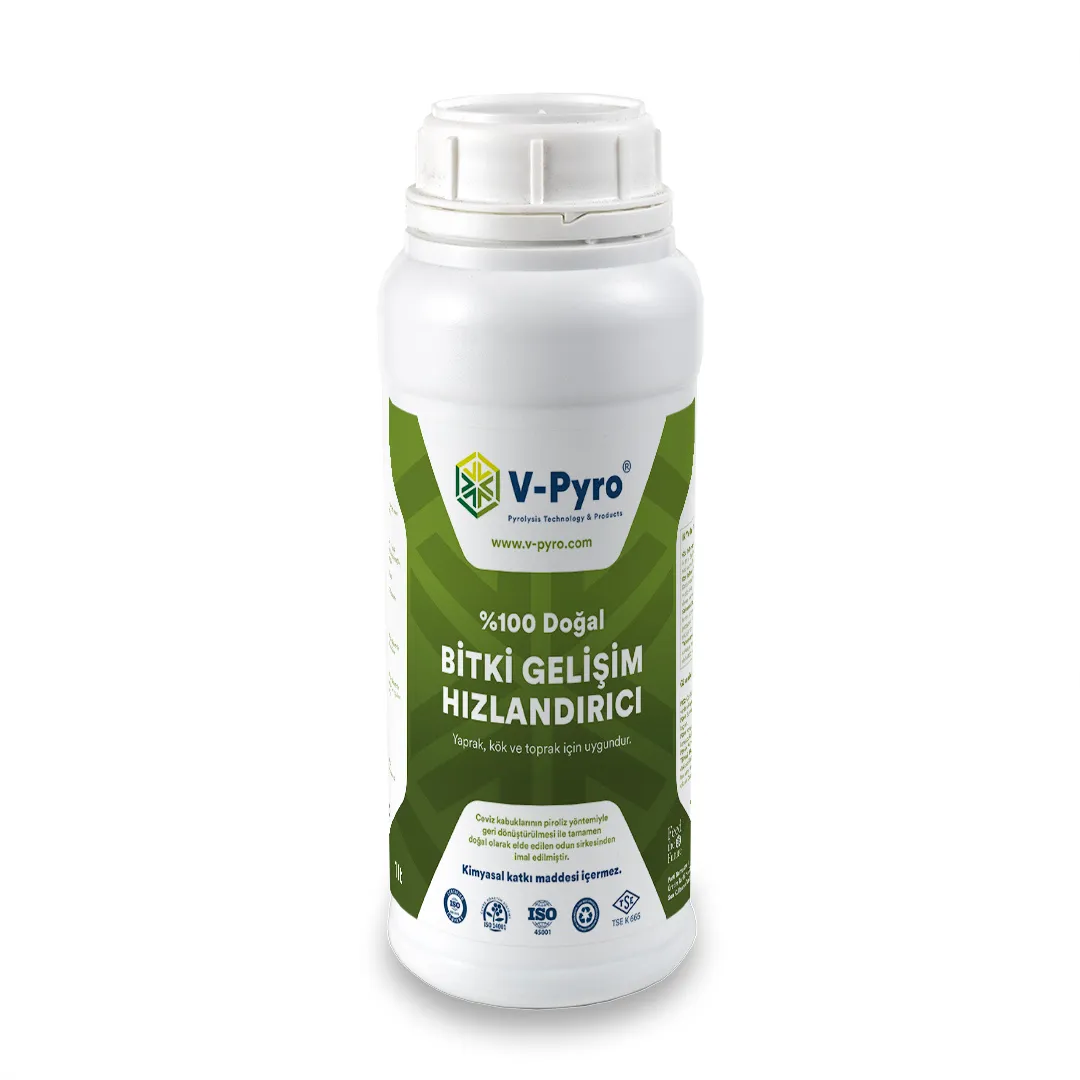
Plant Growth Regulator
Wood vinegar for root, leaf and fruit development, applied to leaves and soil.
 Agriculture and soil
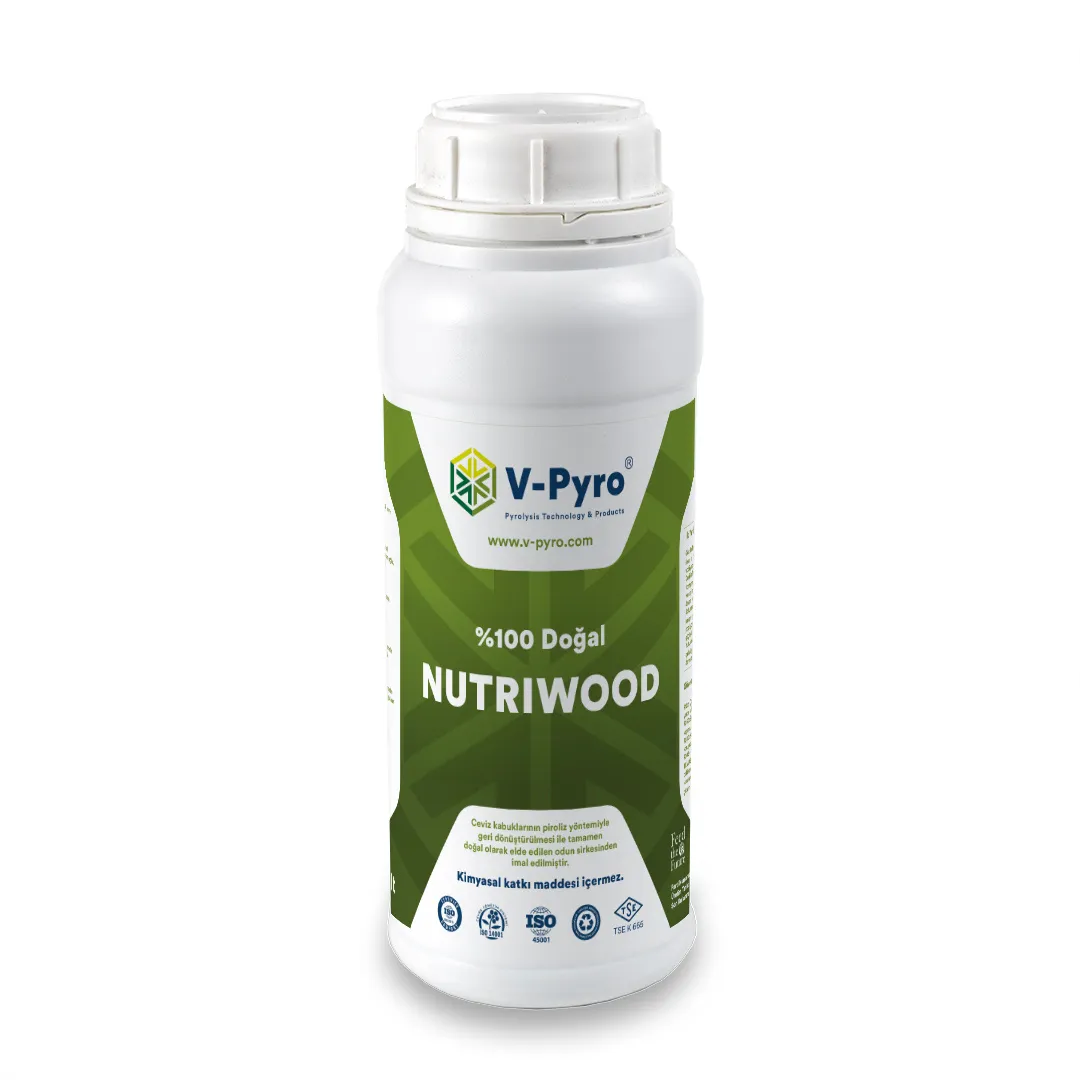
NUTRIWOOD
Wood-vinegar plant nutrition additive for organomineral fertiliser systems.
 Agriculture and soil
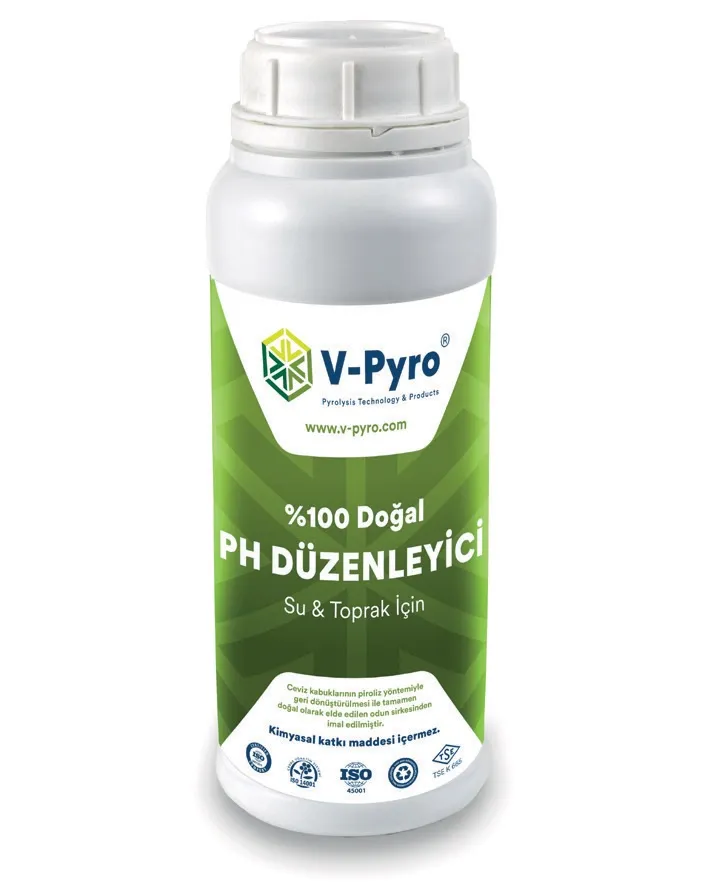
pH Regulator
Natural wood-vinegar pH regulator for soil, foliar and hydroponic use.
 Livestock
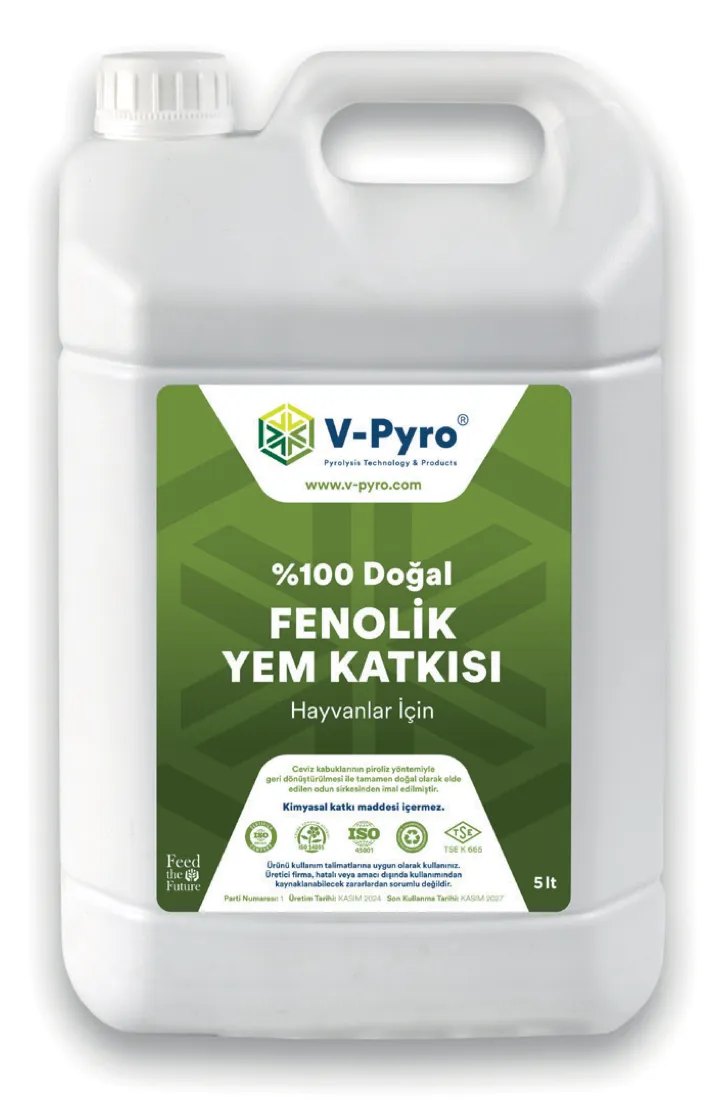
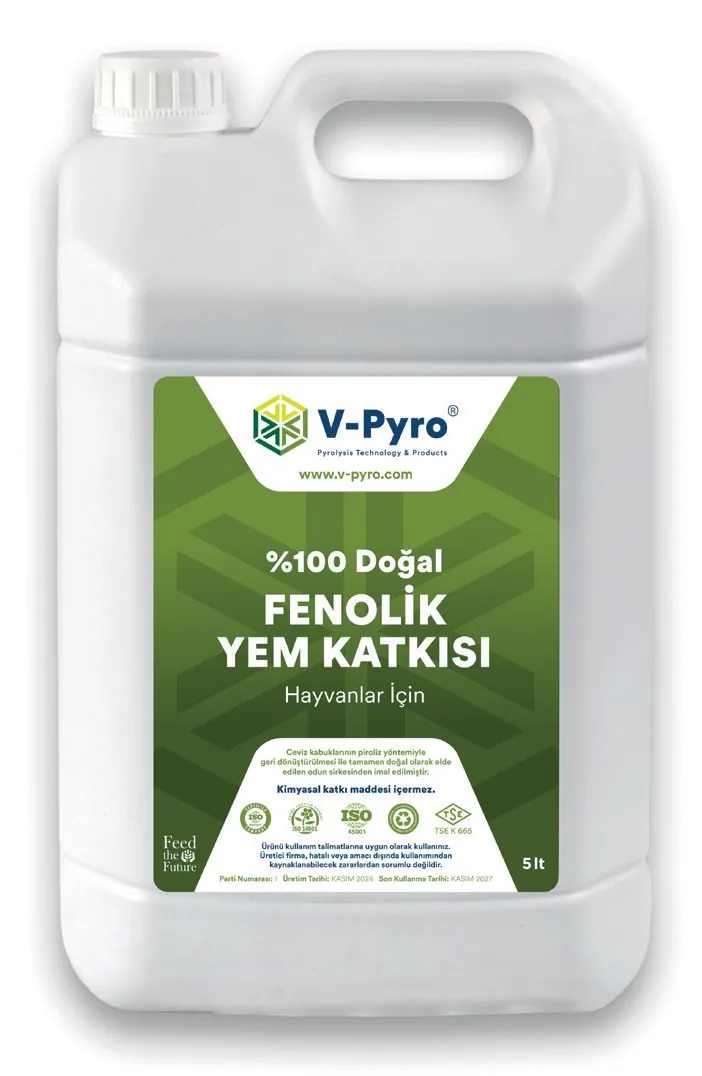
Phenolic Feed Additive
Wood-vinegar based natural feed additive for drinking water.
 Hygiene
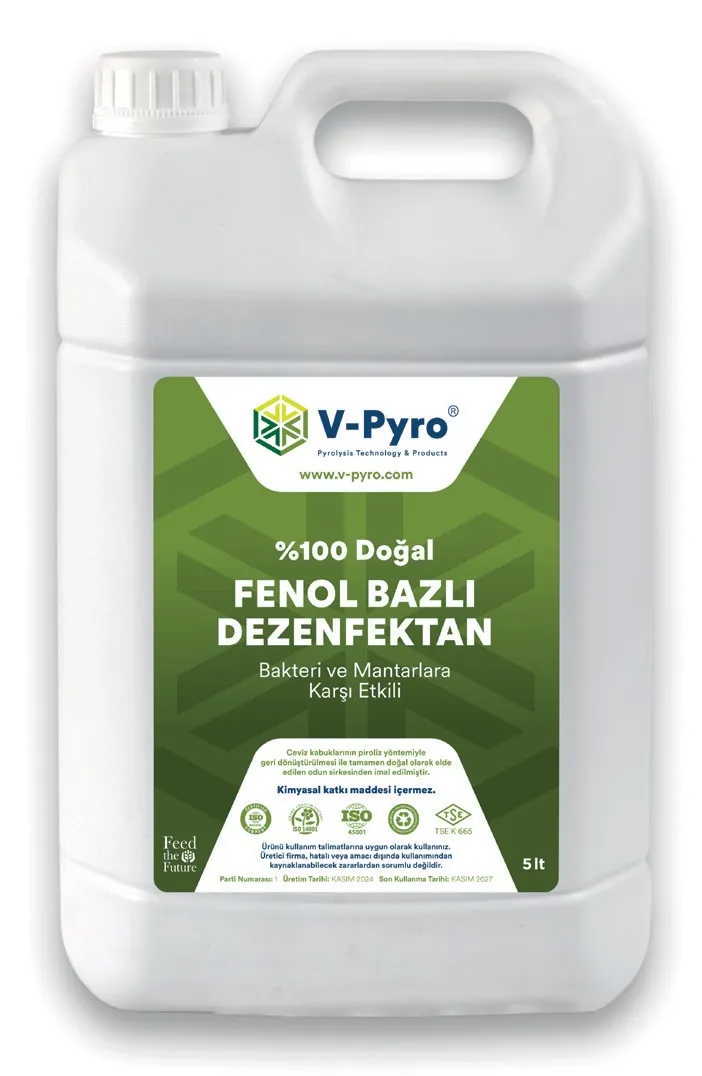
Phenol-Based Natural Disinfectant
Wood-vinegar based natural disinfectant for barns, surfaces and equipment.
 Livestock
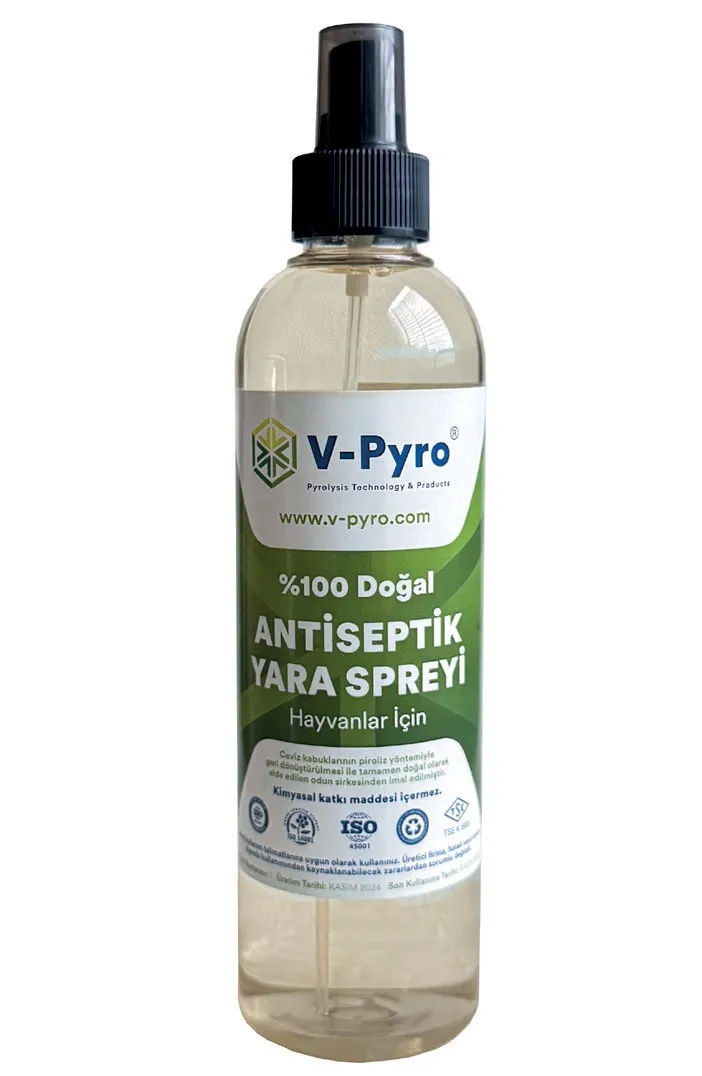
Skin Care Spray
Wood-vinegar based wound and skin care spray for animals.
From the Field
“An 85% field effect of wood vinegar on Fusarium suppression and root development in a greenhouse application.”
Common questions
What is wood vinegar?
It is a liquid obtained by condensing the smoke released during the pyrolysis of organic agricultural waste. It contains acetic acid, phenols, ketones, esters and alcohols, and is used as a natural microbial balancer and antifungal agent.
How is it applied to plants?
It is generally diluted at a ratio of 1:100 (1 litre of wood vinegar + 100 litres of water) and applied as a foliar spray or through drip irrigation. Positive effects have been observed on crops such as tomatoes, peppers and lettuce.
Is wood vinegar harmful to human health?
It is natural in content but can be irritating at high concentrations. It should be diluted before use, and direct contact should be avoided. Certified organic versions are available.
Can it be used in animal feed?
Yes, especially to support the immune system. However, only products licensed as “animal feed additives” should be used, in a controlled way.
Wood vinegar is not a pesticide, so what does it do?
It is a natural microbial balancer in agriculture. It reduces the use of chemical pesticides, strengthens plant immunity and promotes growth.
Can wood vinegar be used as a disinfectant?
Yes. Thanks to its natural phenolic content, it suppresses harmful microorganisms and prevents bad odours in areas such as waste containers, animal shelters and barn floors.
Can it be used to wash fruit and vegetables?
Appropriately diluted wood vinegar (1:200) helps remove pesticide residues from fruit and vegetables. Rinse thoroughly with water before consumption.
Can wood vinegar be mixed with other fertilisers?
Yes. It has a synergistic effect when mixed with compost, liquid fertilisers, seaweed extracts or humic acids. Follow the application dose carefully.
Try it in your greenhouse.
Request a sample or find your nearest authorised dealer.