
Industry
Wood Tar
Organic Tar
A dark, viscous organic tar obtained from the pyrolysis of agricultural waste such as olive pits, walnut shells and apricot kernels. Rich in hydrocarbons, acids and phenols, it is used for wood and metal protection, marine applications, graft and pruning wounds and animal skin care.
- 100%Natural, from agricultural waste
- 3 fieldsIndustry, agriculture and livestock
- 200–400 °CBoiling point range
What is Wood Tar?
Wood tar (organic tar) is a dark, viscous tar from the pyrolysis of agricultural waste such as olive pits, walnut shells and apricot kernels. Rich in hydrocarbons, acids and phenols, it forms a water-repellent layer. It is used in industry, agriculture and livestock farming: for wood, metal and hull protection, graft and pruning wounds, and animal skin care.
A protective barrier in three fields: industry, agriculture, livestock.
Wood tar forms a strongly water-repellent layer that reduces oxygen permeability on the surface it is applied to. It resists acids, oxidation, pests and corrosion, and can be used in coatings, paints, inks, building waterproofing materials and preservatives.
Wood and metal protection
It keeps wood from absorbing moisture and so prevents the growth of fungi and bacteria, slowing decay considerably. On metal surfaces it reduces contact with oxygen, limiting oxidation and preventing corrosion (rust).
Marine applications
A natural protectant for boat and ship surfaces in constant contact with water. Its phenolic compounds and resinous structure prevent marine organisms from attaching and multiplying; this anti-fouling effect reduces microorganism and algae growth. It blocks moisture ingress and prevents rust, lowering maintenance costs and extending service life.
Waste containers
Coating the surfaces of containers that are in contact with waste protects them against the wearing effect of the waste, and its antibacterial and antimicrobial properties also help protect public health.
Graft and pruning wounds
Cuts the wound off from the air and prevents infection. Speeds up wound healing in plants and keeps pests out.
Animal skin care
Protects wounds from infection with its antiseptic and antibacterial effect.
Eco-friendly materials
It can also be used to produce eco-friendly materials such as biofuels and biodegradable plastics.
Phenols, resins and hydrocarbons; the heavy fraction of pyrolysis.
Wood tar is a complex organic mixture with a high content of hydrocarbons, acids and phenols. Phenolic compounds are the main constituents, alongside alkyl phenols, alcohols, esters and olefin compounds.
- Component
- Phenolic compounds
- Component
- Resin and turpentine
- Component
- Hydrocarbons and acids
- Appearance
- Dark brown to black viscous
Parameters
| Parameter | Value |
|---|---|
| Appearance | Dark brown to black viscous liquid or semi-solid |
| Main components | Phenolic compounds such as guaiacol, cresol, xylenol, phenol and o-ethylphenol; turpentine, resin, hydrocarbons, acids and other organic compounds |
| Relative density | Approximately 1.15–1.30 relative to water; exact values may vary with composition and temperature. |
| Boiling point range | Wide; generally 200–400 °C depending on composition. |
| Solubility | Insoluble in water, but readily soluble in organic solvents such as ethanol, ether, chloroform, glacial acetic acid, fixed oils, volatile oils and sodium hydroxide solutions. |
| Flash point | Generally high; exact values depend on composition and density. |
Neat or diluted: three applications by field.
Recommended application methods, by field of use.
| Application | Rate | Frequency | Source |
|---|---|---|---|
| Agricultural · graft and pruning woundsBrush or spatulaProtection | Neat | After pruning and grafting | Manufacturer's recommendation |
| Animal · open woundsApplied directly to the woundProtection | Neat or ointment | Until the wounds heal | Manufacturer's recommendation |
| Industrial · wood, metal, marineBrush, spray, dippingProtection | Neat · 10–20% solvent | Once a year or as needed | Manufacturer's recommendation |
Recommended application methods
| Field of use | Agricultural | Animal | Industrial |
|---|---|---|---|
| Applications | Sealing graft and pruning wounds | Treating open wounds in animals | Wood and metal protection, marine applications |
| Form and rate | Used neat | Neat or as an ointment | Neat or diluted with 10–20% solvent |
| Method | Brush or spatula | Applied directly to the wound | Brush, spray, dipping |
| Frequency | After pruning and grafting | Until the wounds heal | Once a year or as needed |
Consult a veterinarian before applying directly to open wounds in animals. Product-specific rates and frequencies are on each product page.
On a clean surface, by brush, spray or dipping.
- 01
Clean the surface
The surface to be treated must be clean and dry.
- 02
Thin if needed
Wood tar can easily be used with synthetic thinners. For industrial use it is applied neat or diluted with 10–20% solvent.
- 03
Apply
Apply with standard paint equipment, by brush, spray or dipping.
- 04
Renew
For industrial use, repeat the application once a year or as needed.
Usage warnings
- Take appropriate precautions and use personal protective equipment when working with wood tar.
- Avoid contact with skin and do not breathe the vapours.
Safety information
- Signal word
- Danger
- Hazard statements
- H301 Toxic if swallowed.
- H311 Toxic in contact with skin.
- H314 Causes severe skin burns and eye damage.
- H317 May cause an allergic skin reaction.
- H332 Harmful if inhaled.
- H341 Suspected of causing genetic defects.
- H373 May cause damage to organs through prolonged or repeated exposure.
- H412 Harmful to aquatic life with long lasting effects.
- Precautionary statements
- P201 Obtain special instructions before use.
- P261 Avoid breathing vapours.
- P264 Wash hands thoroughly after handling.
- P301+P330+P331 IF SWALLOWED: Rinse mouth. Do NOT induce vomiting.
- P303+P361+P353 IF ON SKIN (or hair): Take off immediately all contaminated clothing. Rinse skin with water/shower.
- P304+P340 IF INHALED: Remove person to fresh air and keep comfortable for breathing.
- P305+P351+P338 IF IN EYES: Rinse cautiously with water for several minutes. Remove contact lenses, if present and easy to do. Continue rinsing.
- P312 Call a POISON CENTER/doctor if you feel unwell.
- P501 Dispose of contents/container in accordance with national regulations.
- Industry
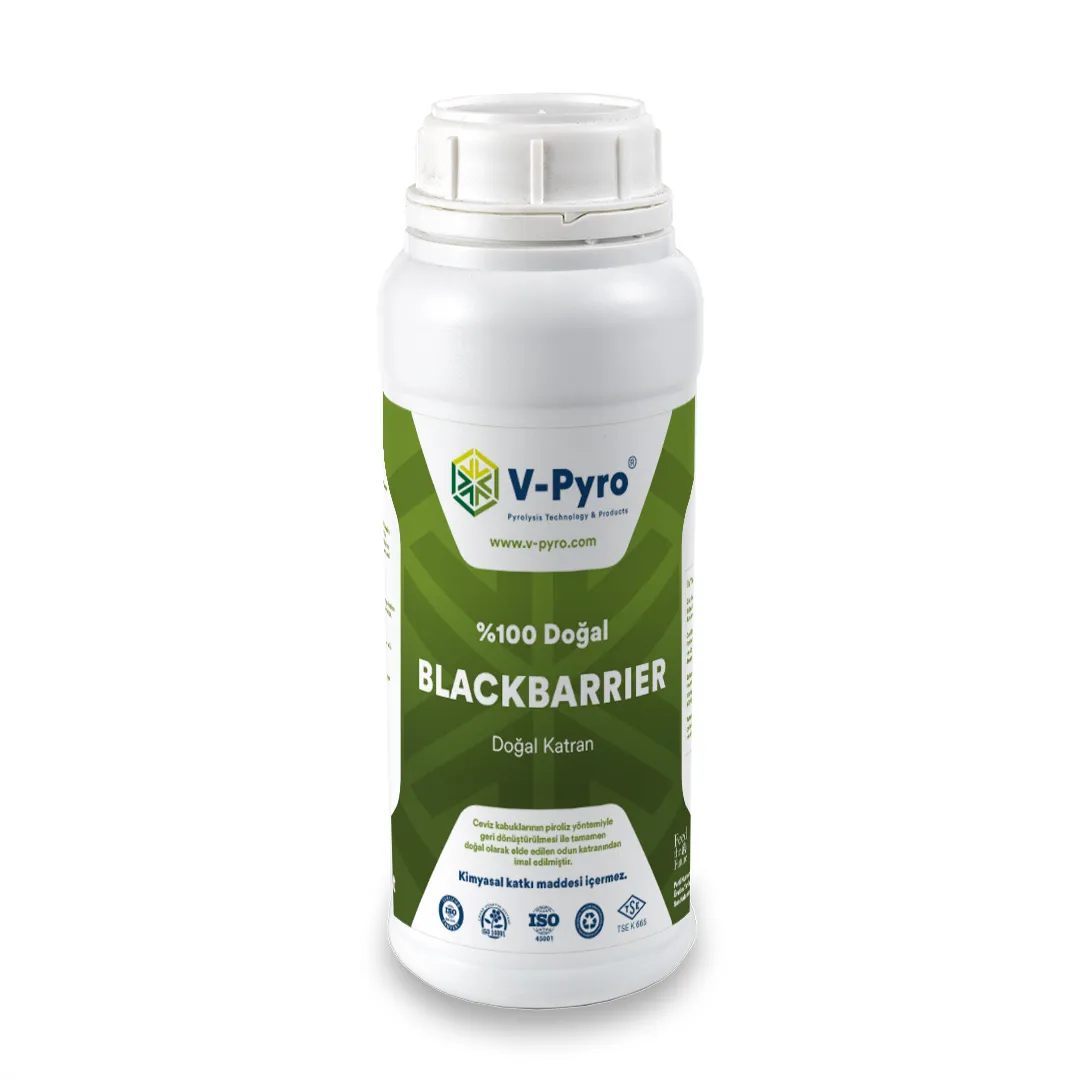
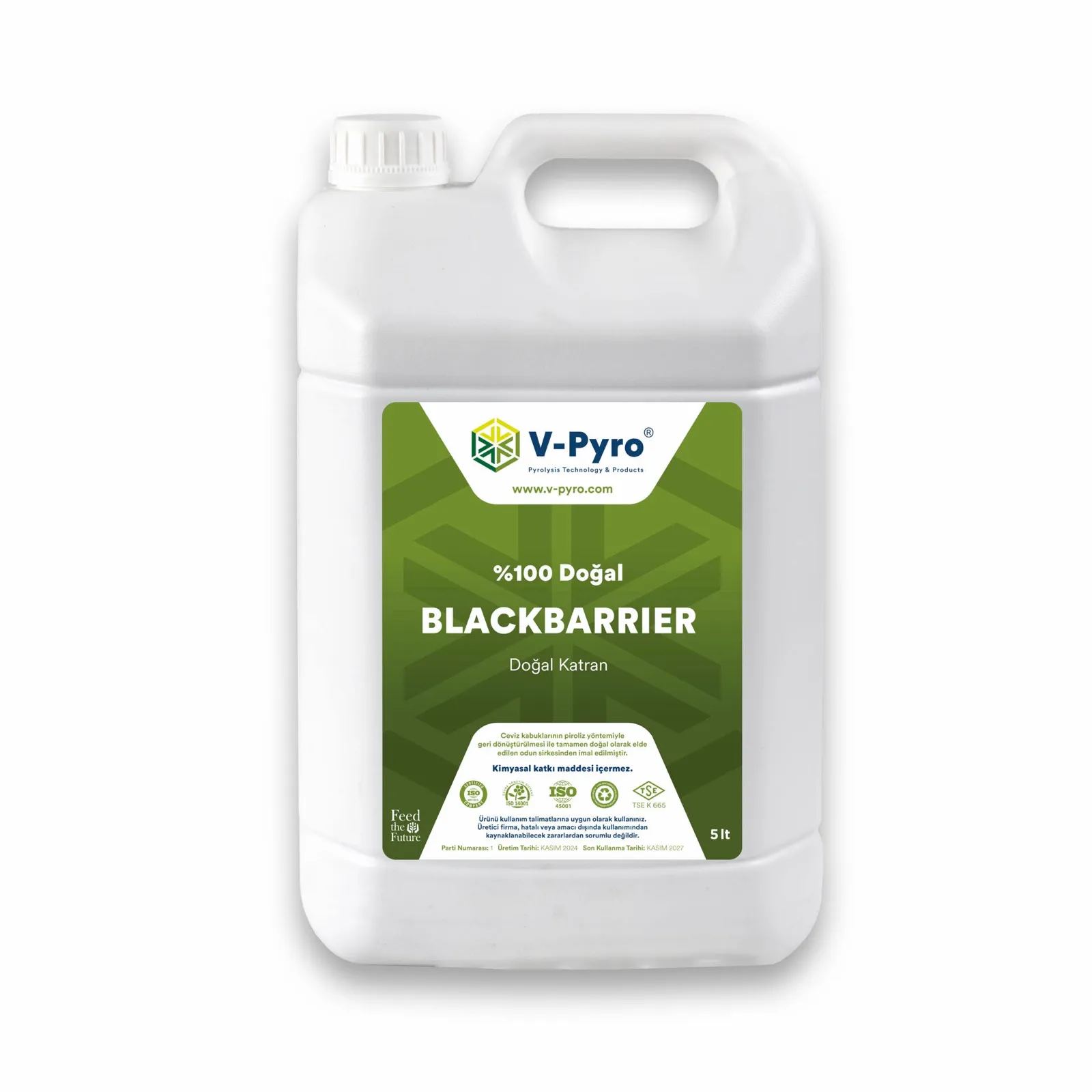
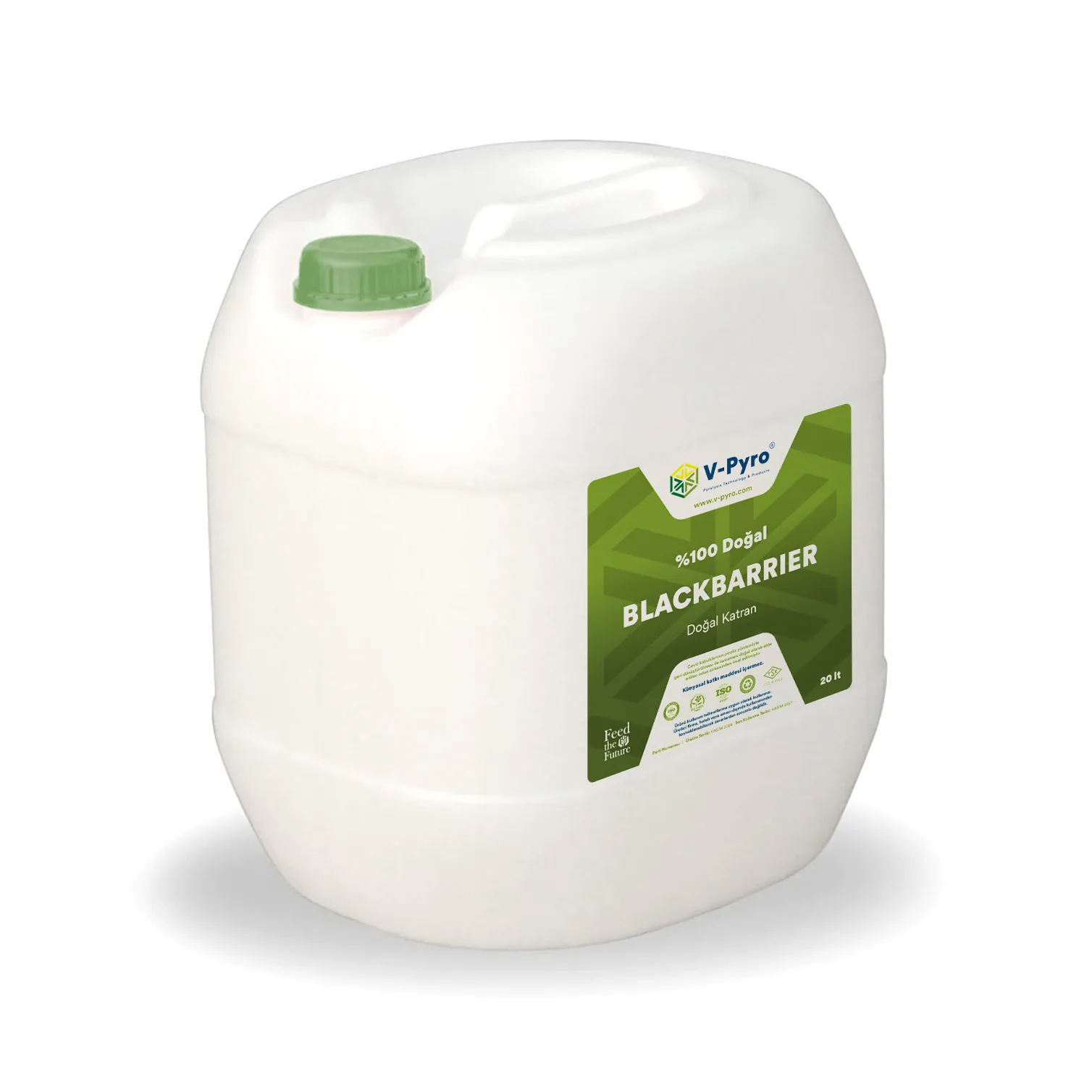
BLACKBARRIER
Water-repellent, anti-corrosion natural tar coating for wood and metal surfaces.
- Industry
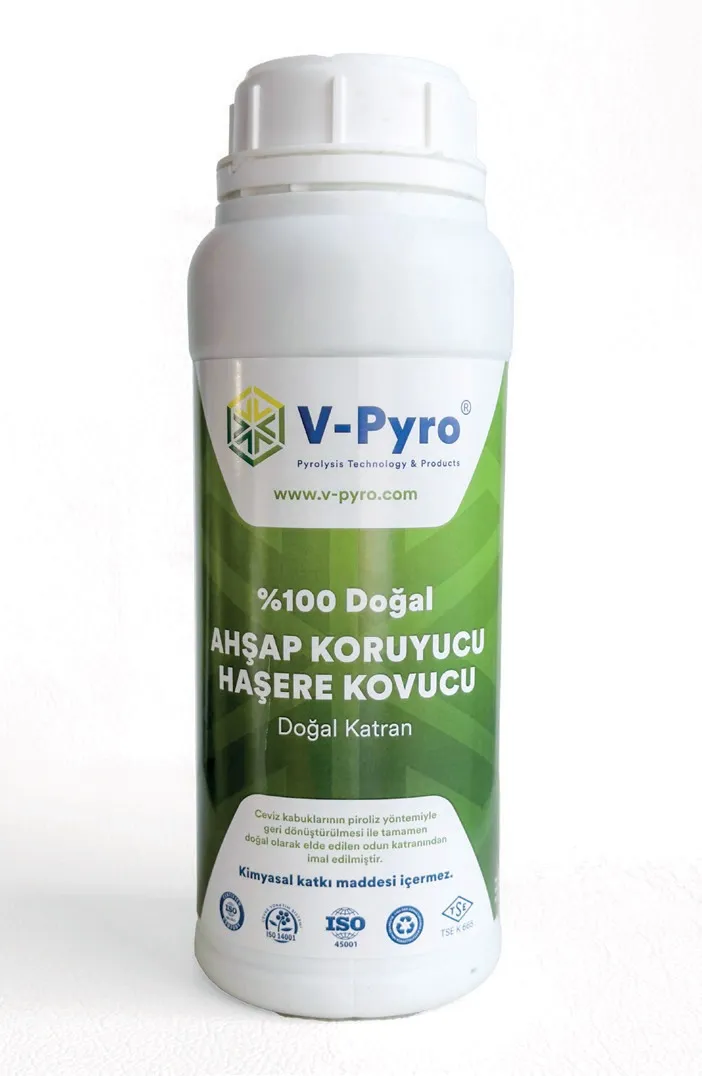
Wood Protector / Pest Repellent
Natural tar that protects wood against decay, fungi and wood-boring pests.
- Agriculture and soil
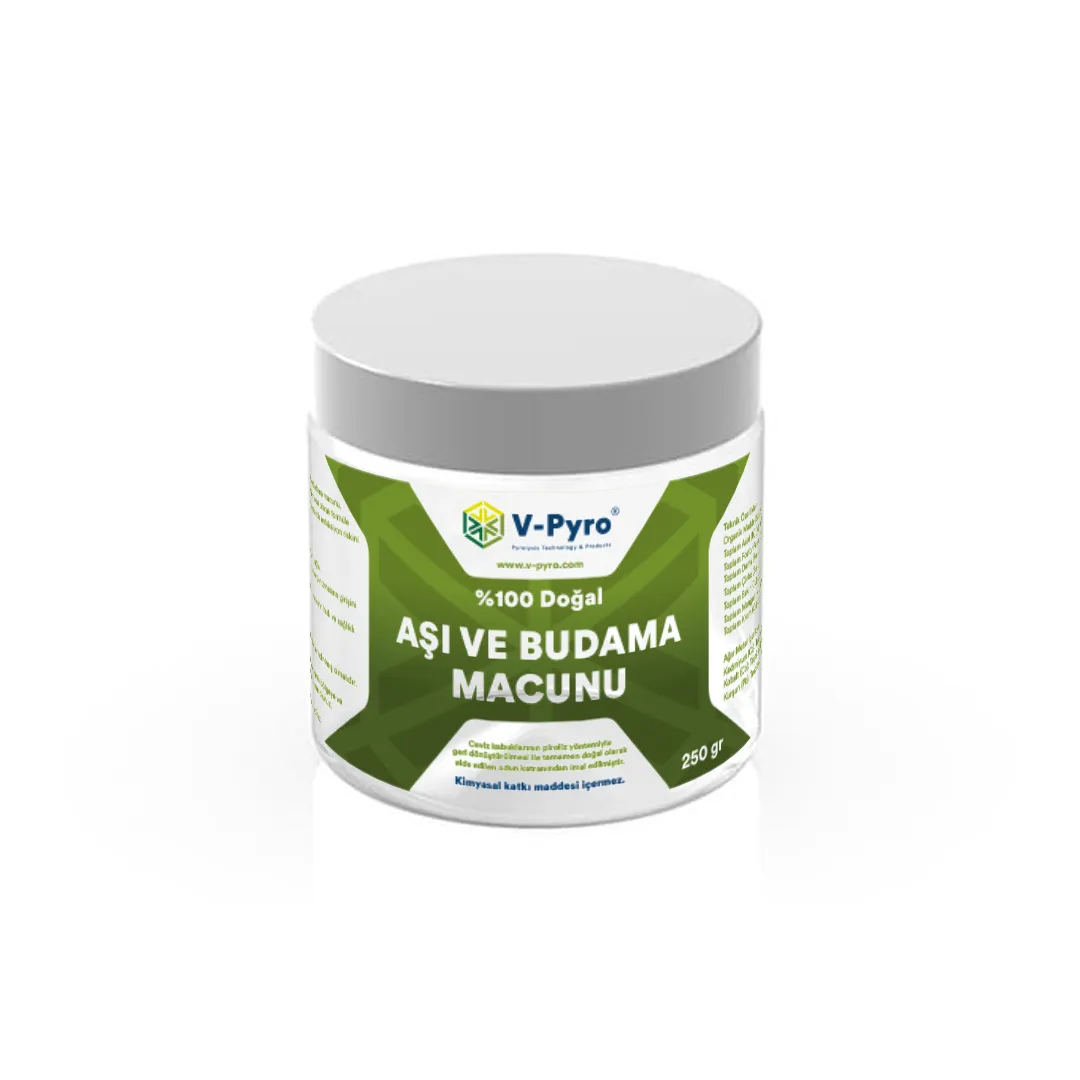
Grafting / Pruning Paste
Natural wood-tar paste that seals graft sites and pruning cuts.
- Livestock
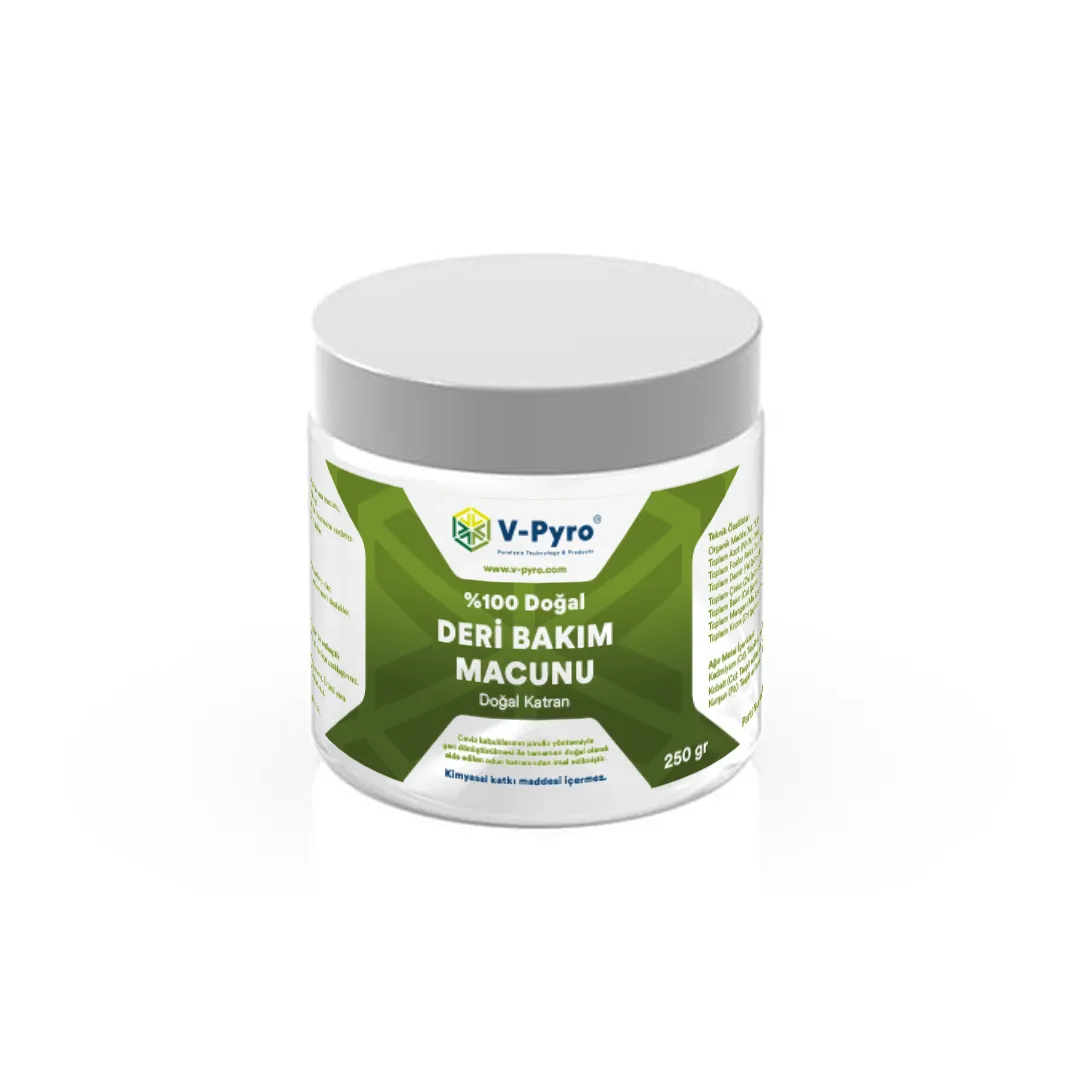
Skin Care Paste
Wood-tar-based care paste for skin cracks, irritation and hoof problems.
Common questions
What is wood tar and what is it used for?
Wood tar is one of the liquid by-products of the pyrolysis process. It is known for its antifungal and antiseptic properties and is traditionally used in wood preservation, veterinary care and non-pharmaceutical animal care.
Can it be used as a plant protection product?
Not directly. However, it may be included in some formulations as a natural pesticide or fungicide additive.
How is it used in animal care?
It can be applied topically as an antiseptic for hoof and skin problems. Licensed products must be used according to their instructions.
Is wood tar applied like paint?
Yes. It can be applied to wooden and metal surfaces with a brush or spray. Once dry, it forms a waterproof layer. Ideal for waste containers, poles and piers.
How long does tar last?
Depending on the surface and weather conditions, it can keep its protective effect for 2–5 years. It is resistant to salt water and is used in marine applications.
Can it be used as a grafting / pruning paste?
Yes. Tar-based natural pruning pastes in particular can be applied to tree cuts to keep out fungi and bacteria.
Is the tar smell permanent?
After the first application it has a natural, resin-like smell that fades over time. It is not as heavy or persistent as chemical paint odours.
Try it in the field.
Request a sample or find your nearest authorised dealer.