
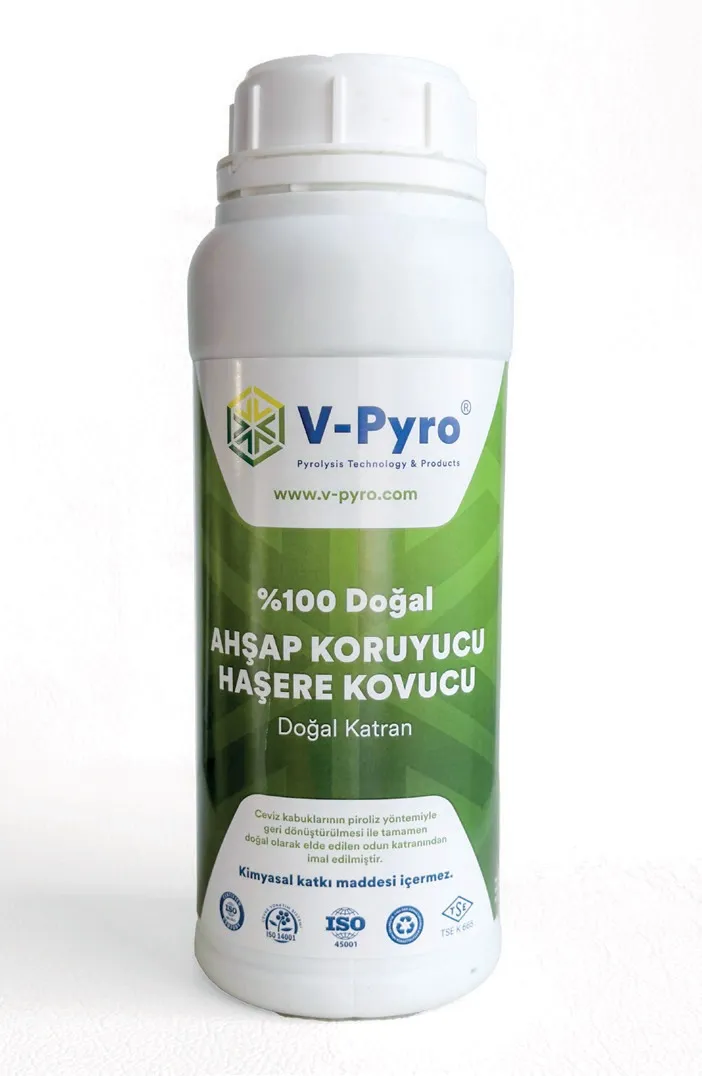
Industry
Wood Protector / Pest Repellent
Natural Tar · For wooden surfaces
Wood tar obtained through the pyrolysis of olive pits, walnut shells and apricot kernels is a natural product known for its wood-preserving and insect-repelling properties. Produced from high-quality raw materials, it extends the lifespan of wooden materials and provides effective protection against harmful organisms.
- 1–2 coatsDepending on the absorbency of the wood
- 24 hMinimum wait between coats
- 48 hMinimum time to dry fully
What is Wood Protector / Pest Repellent?
Wood Protector / Pest Repellent is a natural wood tar obtained through the pyrolysis of olive pits, walnut shells and apricot kernels. It penetrates deep into wooden surfaces, preventing decay, fungi and mould, and protects wood against termites, bed bugs and other wood-damaging pests. It is applied by brush, roller or dipping to extend the lifespan of wooden materials.
Against decay, fungi and wood-boring pests.
Wood preservative
Wood tar deeply penetrates wooden surfaces, preventing decay, fungi and mould formation.
Insect repellent
Thanks to its natural components, it protects wood against termites, bed bugs and other wood-damaging pests.
One or two coats, depending on the absorbency of the wood.
| Application | Rate | Frequency | Source |
|---|---|---|---|
| Wooden surfacesDepending on absorbency · at least 24 hours between coatsProtection | 1–2 coats | — | Manufacturer's recommendation |
Prepare, apply one or two coats, allow 48 hours to dry.
- 01
Prepare the surface
The wooden surface must be clean, dry and free of dust. Remove any old layers of paint or varnish by sanding.
- 02
Apply
Apply the product by brush, roller or dipping.
- 03
Second coat if needed
Depending on the absorbency of the wood, 1 to 2 coats are recommended. Allow at least 24 hours between coats.
- 04
Let it dry
After application, allow at least 48 hours for the surface to dry fully.
Safety information
- Signal word
- Danger
- Hazard statements
- H301 Toxic if swallowed.
- H311 Toxic in contact with skin.
- H314 Causes severe skin burns and eye damage.
- H317 May cause an allergic skin reaction.
- H332 Harmful if inhaled.
- H341 Suspected of causing genetic defects.
- H373 May cause damage to organs through prolonged or repeated exposure.
- H412 Harmful to aquatic life with long lasting effects.
- Precautionary statements
- P201 Obtain special instructions before use.
- P261 Avoid breathing vapours.
- P264 Wash hands thoroughly after handling.
- P301+P330+P331 IF SWALLOWED: Rinse mouth. Do NOT induce vomiting.
- P303+P361+P353 IF ON SKIN (or hair): Take off immediately all contaminated clothing. Rinse skin with water/shower.
- P304+P340 IF INHALED: Remove person to fresh air and keep comfortable for breathing.
- P305+P351+P338 IF IN EYES: Rinse cautiously with water for several minutes. Remove contact lenses, if present and easy to do. Continue rinsing.
- P312 Call a POISON CENTER/doctor if you feel unwell.
- P501 Dispose of contents/container in accordance with national regulations.
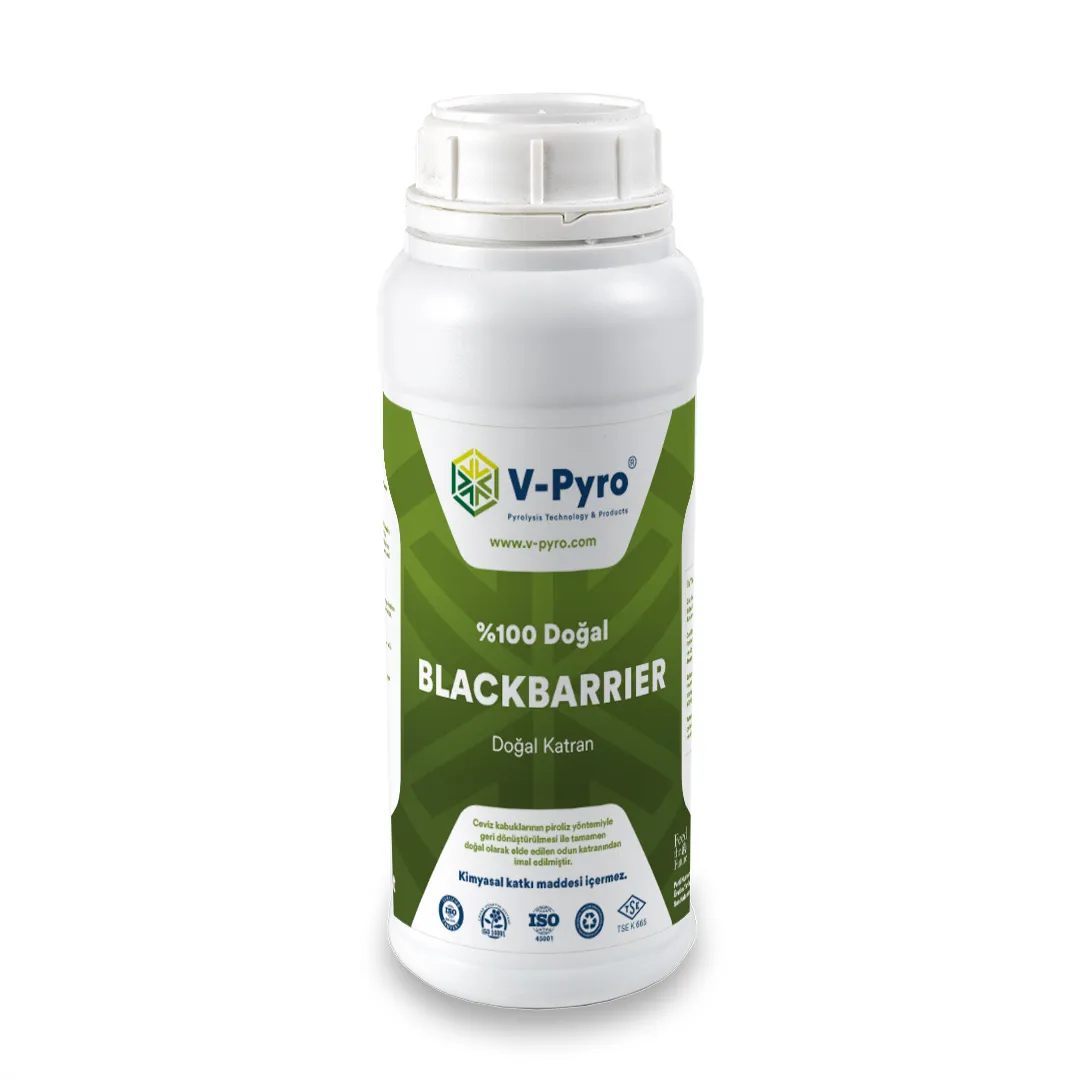 Industry
BLACKBARRIER
Water-repellent, anti-corrosion natural tar coating for wood and metal surfaces.
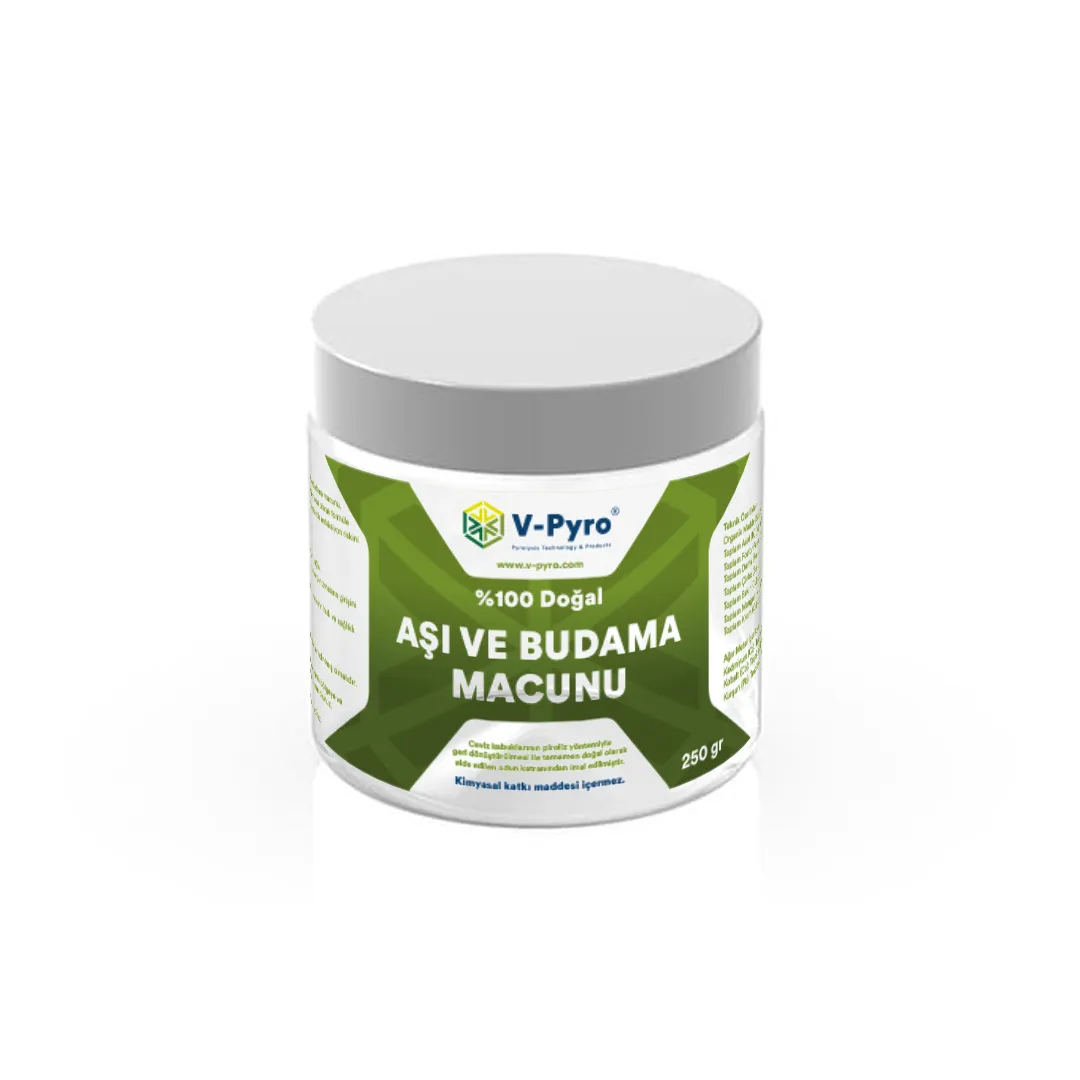 Agriculture and soil
Grafting / Pruning Paste
Natural wood-tar paste that seals graft sites and pruning cuts.
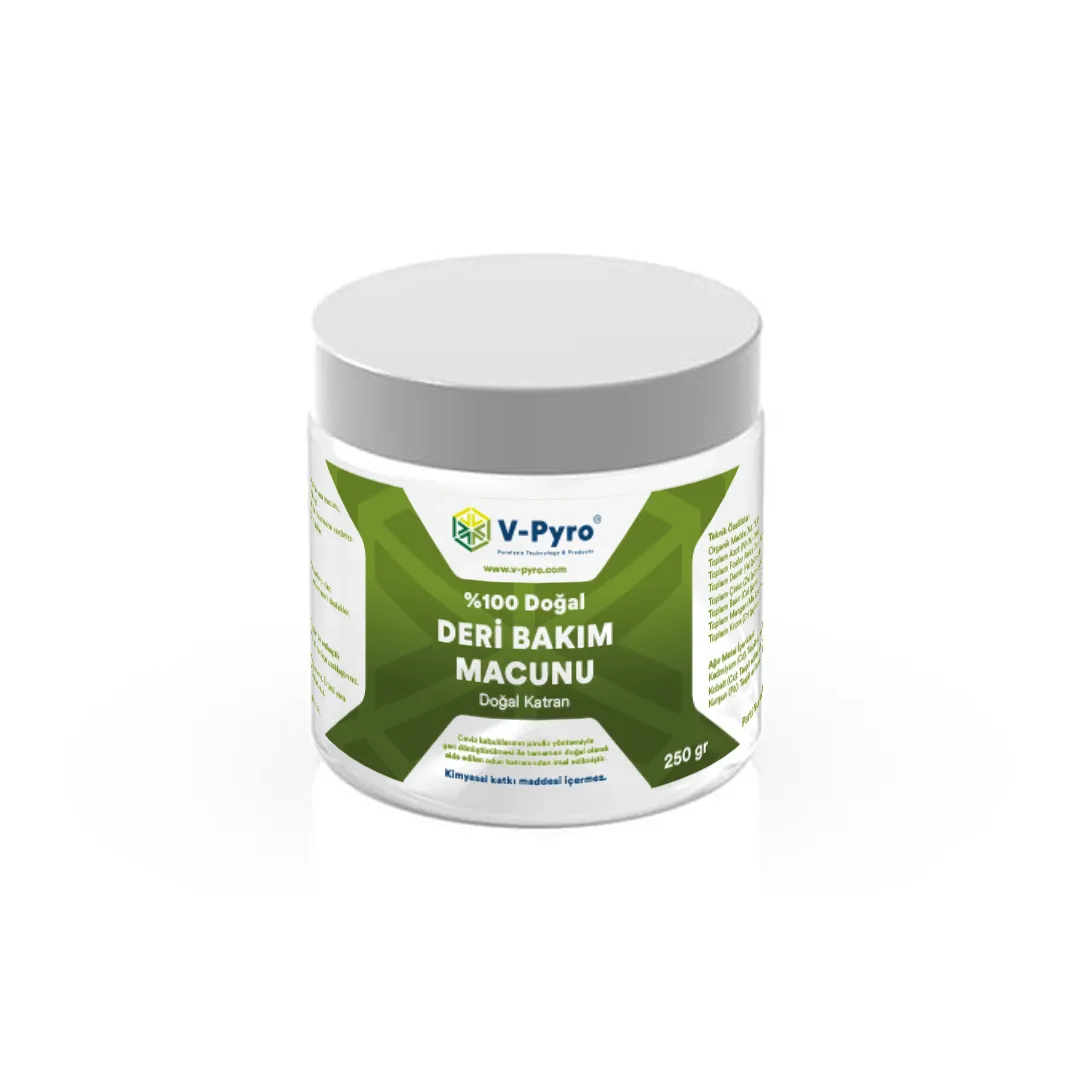 Livestock
Skin Care Paste
Wood-tar-based care paste for skin cracks, irritation and hoof problems.
Try it in the field.
Request a sample or find your nearest authorised dealer.