
Agriculture and soil
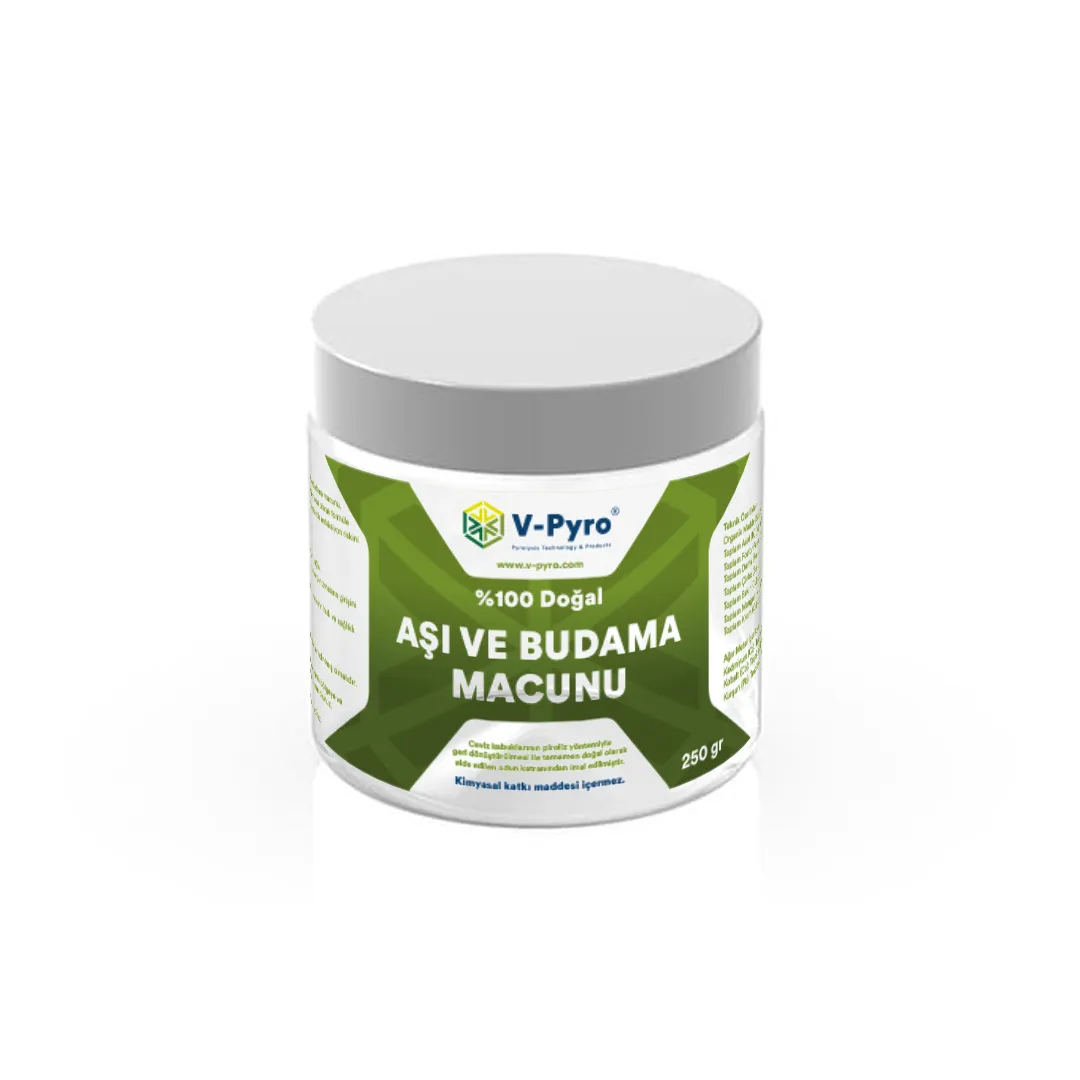
Grafting / Pruning Paste
Natural Tar · For graft and pruning wounds
A thick, natural wood tar obtained from the slow pyrolysis of lignocellulosic agricultural waste (such as olive pits, walnut shells and apricot kernels). It contains natural antiseptic, antifungal and water-resistant compounds, which make it suitable for sealing grafting sites and pruning cuts on trees.
- OnceOne application is usually sufficient
- 10–20%Resinous components forming a physical barrier
- 1–4%Antiseptic and antifungal phenolic compounds
What is Grafting / Pruning Paste?
Grafting / Pruning Paste is a thick, natural wood tar obtained from the pyrolysis of lignocellulosic agricultural waste such as olive pits, walnut shells and apricot kernels. It contains natural antiseptic, antifungal and water-resistant compounds. It is used on trees to seal grafting sites and pruning cuts and to protect these surfaces against bacteria, fungi and insects.
Seals the graft site and the pruning cut from the outside world.
Prevents drying
Prevents the grafting site from drying out.
Against microorganisms
Provides physical and chemical protection against bacteria, fungi and harmful microorganisms.
Barrier against insects
Blocks insects and external factors from entering the wound surface.
Reduces water loss
Reduces water loss by isolating the wound surface from the external environment.
Graft take and recovery
Improves graft take rates and accelerates recovery after pruning.
Air and moisture insulation
Insulates the surface from air and moisture.
Phenols protect, resins build a barrier.
Phenolic compounds have an antiseptic and antifungal effect. Aromatic hydrocarbons protect the surface and make it water-resistant, while resinous components form a physical barrier. The carbon-rich oil phase acts as the carrier and protective matrix.
Composition (qualitative and quantitative)
| Component | Ratio (%) | Function |
|---|---|---|
| Phenolic compounds (phenol, cresol, guaiacol) | 1–4% | Antiseptic and antifungal effect |
| Aromatic hydrocarbons | 2–6% | Surface protection and water resistance |
| Resinous components | 10–20% | Forms a physical barrier |
| Carbon-rich oil phase (after water evaporation) | 60–80% | Carrier and protective matrix |
Neat, in a thin layer.
| Application | Rate | Frequency | Source |
|---|---|---|---|
| Grafting siteImmediately after graftingProtection | Neat · thin layer | Usually a single application | Manufacturer's recommendation |
| Pruning cutAfter pruning, by brush or spatulaProtection | Neat | Usually a single application | Manufacturer's recommendation |
Right after grafting or pruning, in a thin layer.
- 01
For grafting
Immediately after grafting, cover the grafting site with a thin layer of tar.
- 02
For pruning
After pruning, apply the paste to the cut surface with a brush or spatula.
- 03
Timing
Apply while the plant is dormant or in early spring.
- 04
Frequency
One application is usually sufficient. Reapply after heavy rainfall if needed.
Usage warnings
- The tar should be used at room temperature in a semi-fluid state.
- Avoid application in freezing or excessively hot weather.
- On fruit trees grown for food, apply only to the trunk or permanent structural parts.
Safety information
- Signal word
- Danger
- Hazard statements
- H301 Toxic if swallowed.
- H311 Toxic in contact with skin.
- H314 Causes severe skin burns and eye damage.
- H317 May cause an allergic skin reaction.
- H332 Harmful if inhaled.
- H341 Suspected of causing genetic defects.
- H373 May cause damage to organs through prolonged or repeated exposure.
- H412 Harmful to aquatic life with long lasting effects.
- Precautionary statements
- P201 Obtain special instructions before use.
- P261 Avoid breathing vapours.
- P264 Wash hands thoroughly after handling.
- P301+P330+P331 IF SWALLOWED: Rinse mouth. Do NOT induce vomiting.
- P303+P361+P353 IF ON SKIN (or hair): Take off immediately all contaminated clothing. Rinse skin with water/shower.
- P304+P340 IF INHALED: Remove person to fresh air and keep comfortable for breathing.
- P305+P351+P338 IF IN EYES: Rinse cautiously with water for several minutes. Remove contact lenses, if present and easy to do. Continue rinsing.
- P312 Call a POISON CENTER/doctor if you feel unwell.
- P501 Dispose of contents/container in accordance with national regulations.
Phenolic compounds and a centuries-old pruning tradition.

The antiseptic and antifungal effects of tar come from its phenolic compounds. Phenol and its derivatives damage microbial cell walls, providing disinfection (Melo et al., 2014). In traditional forestry and fruit growing, natural resins and tars have been used for centuries to seal pruning wounds. Recent studies have shown that plant-based pyrolytic tars offer longer-lasting protection than synthetic pastes (Yoshimoto & Hata, 2019).
Melo et al., 2014 · Yoshimoto & Hata, 2019
 Industry
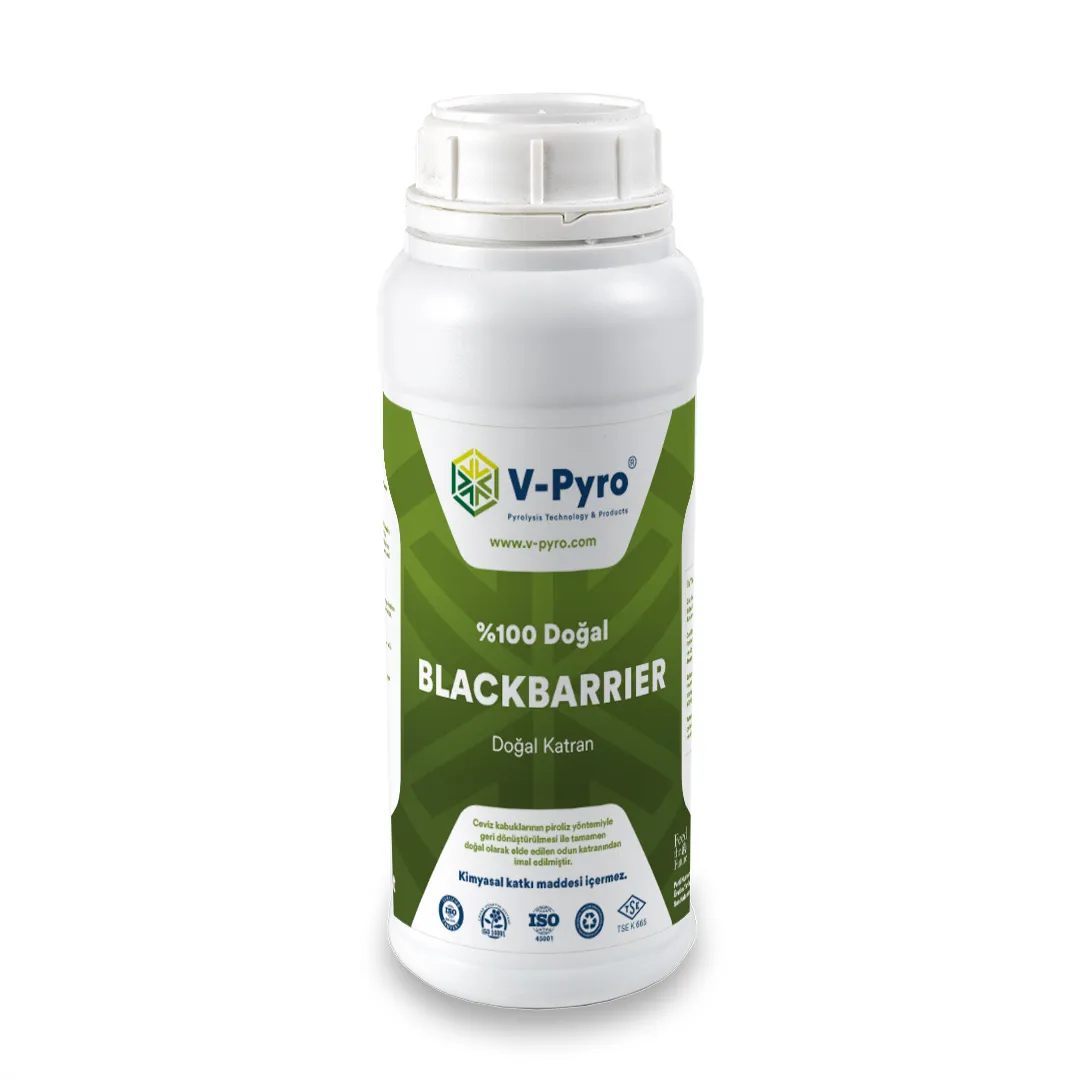
BLACKBARRIER
Water-repellent, anti-corrosion natural tar coating for wood and metal surfaces.
 Industry
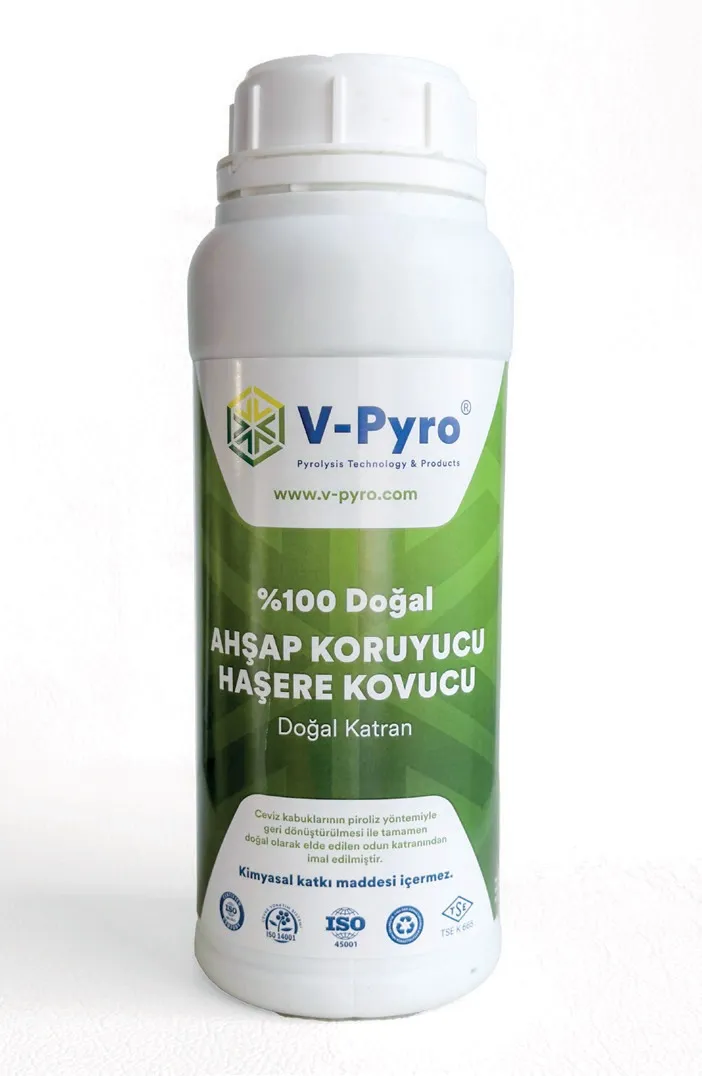
Wood Protector / Pest Repellent
Natural tar that protects wood against decay, fungi and wood-boring pests.
 Livestock
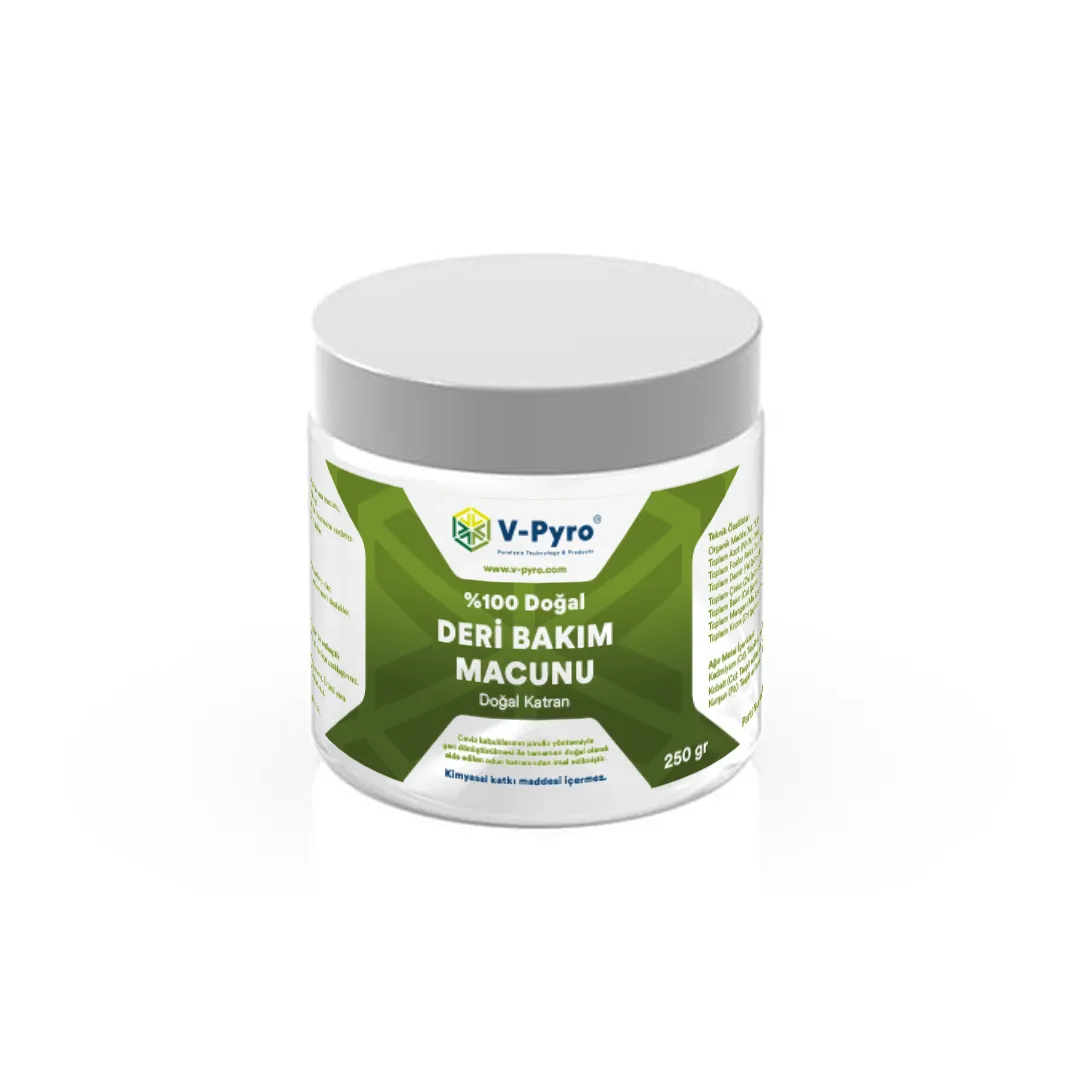
Skin Care Paste
Wood-tar-based care paste for skin cracks, irritation and hoof problems.
Try it in the field.
Request a sample or find your nearest authorised dealer.