
Agriculture and soil
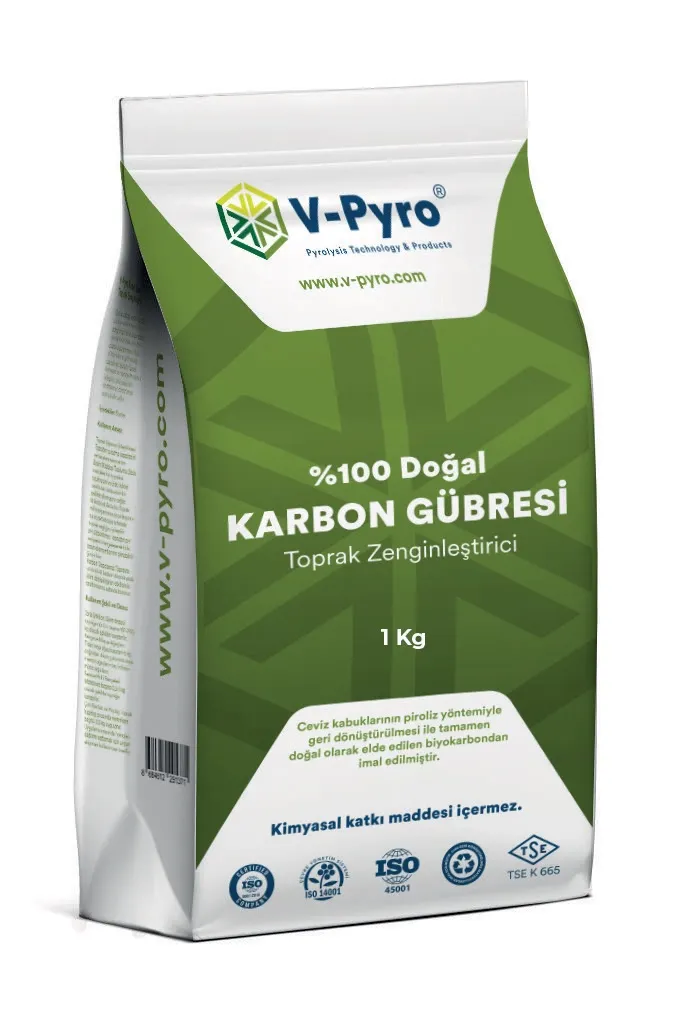
Carbon Fertilizer
Soil Enhancer · Biochar
Produced through the pyrolysis of olive pits, walnut shells and apricot kernels, this biochar is specifically designed for use in agriculture as a soil enhancer and carbon fertiliser.
- 100%Natural; contains no chemical additives
- 100–200kg/da · field crops before sowing
- 1–5 kgPer seedling or tree
What is Carbon Fertilizer?
Carbon Fertilizer is a biochar soil enhancer with no chemical additives, produced by pyrolysing olive pits, walnut shells and apricot kernels. Its high surface area and porous structure improve the soil's water and nutrient retention, aeration and microbial activity. It is used in field, garden and greenhouse soils, when planting seedlings and trees, and for lawns and landscaping.
Improves the soil physically, chemically and biologically.
With its high surface area and porosity, it improves the physical, chemical and biological properties of soil, supports plant growth and contributes to sustainable agriculture.
Soil structure improvement
Enhances soil water retention capacity and aeration.
Nutrient retention
Improves the retention of nutrients in the soil and their more effective uptake by plant roots.
Microbial activity
Boosts soil microorganism populations and activity, improving overall soil health.
pH regulation
Balances soil pH levels, increasing the availability of plant nutrients.
Carbon storage
Stores carbon in the soil long-term, helping mitigate the effects of climate change.
Porous biochar from agricultural residues.
Olive pits, walnut shells and apricot kernels are turned into biochar by pyrolysis. The high surface area and porous structure of the resulting material increase the soil's water retention capacity and aeration and hold nutrients for the roots. This product contains biochar whose carbon sequestration effect has been proven according to international standards; carbon credits are separate from the physical product.
- Feedstock
- Olive pits
- Feedstock
- Walnut shells
- Feedstock
- Apricot kernels
- Additives
- No chemical additives
Dosed by field, garden, greenhouse or lawn.
| Application | Rate | Frequency | Source |
|---|---|---|---|
| Field cropsMixed into the soil before sowingSoil improvement | 100 – 200 kg/da | — | Manufacturer's recommendation |
| Gardens and fruit treesPer seedling or tree · into the planting hole or under the canopy of existing treesSoil improvement | 1 – 5 kg / tree | — | Manufacturer's recommendation |
| Greenhouses and home gardensMixed into the soilSoil improvement | 0.5 – 1 kg/m² | — | Manufacturer's recommendation |
| Lawns and landscapingApplied during soil preparationSoil improvement | 0.5 kg/m² | — | Manufacturer's recommendation |
These rates are general recommendations, not a licensed label or an agronomist's prescription. 1 decare (da) = 1,000 m². Consult our technical team about your soil and try them on a small plot first.
Mix into the soil before sowing or planting.
- 01
Choose the timing
Apply before sowing for field crops, and during soil preparation for lawns and landscaping.
- 02
Set the amount
Take the rate for your application area from the Dose–Effect tab.
- 03
Apply
Mix into the soil in fields, greenhouses and home gardens; for seedlings and trees, apply directly into the planting hole or under the canopy of existing trees.
Safety information
- Signal word
- Warning
- Hazard statements
- H319 · Causes serious eye irritation.
- H335 · May cause respiratory irritation.
- Precautionary statements
- P264 · Wash hands thoroughly after handling.
- P271 · Use only outdoors or in a well-ventilated area.
- P304+P340 · IF INHALED: Remove person to fresh air and keep comfortable for breathing.
- P305+P351+P338 · IF IN EYES: Rinse cautiously with water for several minutes. Remove contact lenses, if present and easy to do. Continue rinsing.
- P312 · Call a poison centre or doctor if you feel unwell.
- P501 · Dispose of contents/container in accordance with national regulations.
Try it in the field.
Request a sample or find your nearest authorised dealer.