
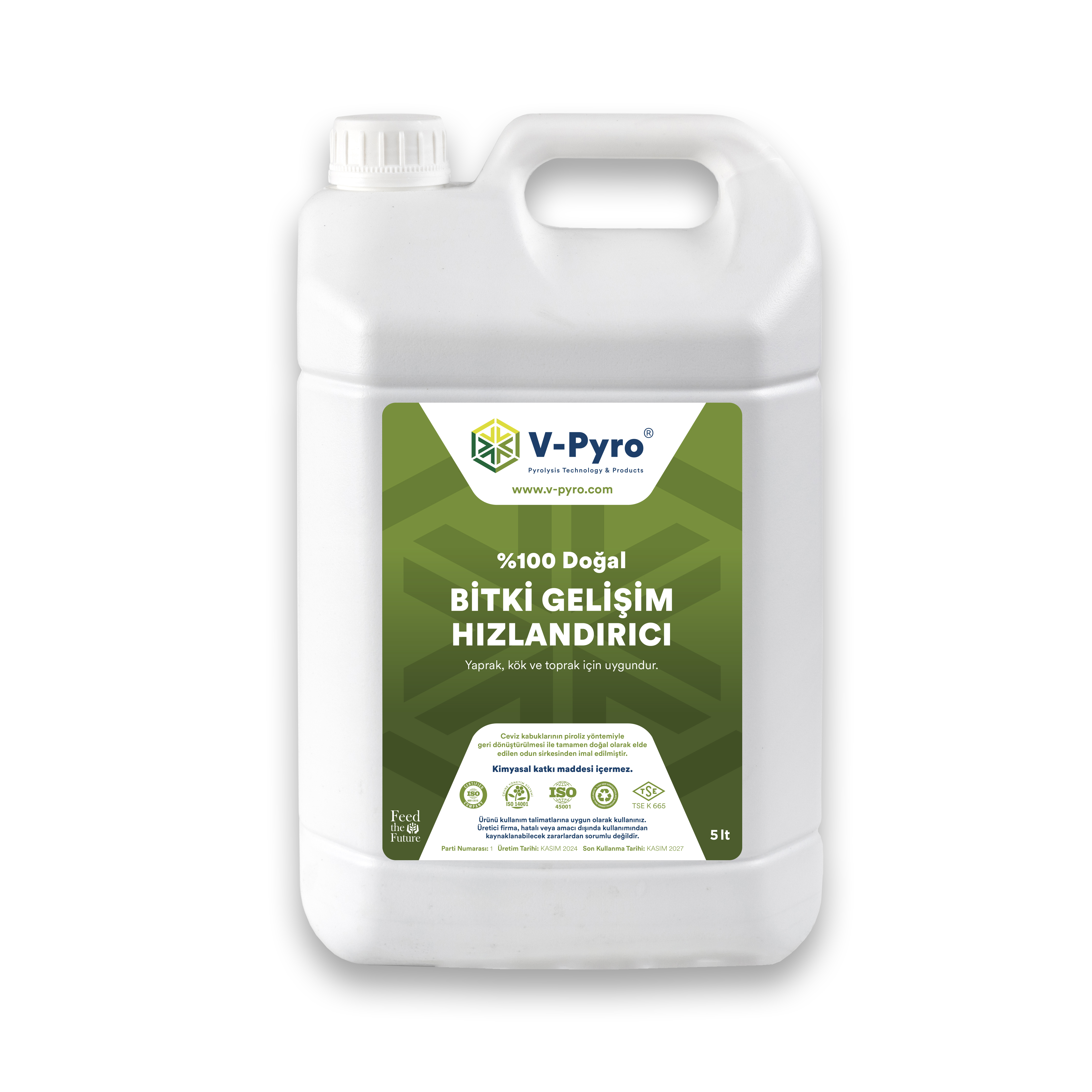
V-PYRO Plant Growth Regulator 5L
5 L
₺ 6.000,00
Select Size
1 L 5 L 20 LV-PYRO PLANT GROWTH REGULATOR
Product Description:
Pyroligneous acid (wood vinegar), a completely natural liquid obtained through low-temperature pyrolysis of lignocellulosic agricultural waste such as olive pits, contains components that support plant growth and resistance mechanisms. It can be applied to the soil or leaves as a plant growth regulator.
Composition (Qualitative – Quantitative Structure):
| Component | Ratio (%) | Mechanism of Action |
|---|---|---|
| Acetic Acid (CH₃COOH) | 3.0 – 5.5 | Enhances cell wall permeability, promotes root development |
| Phenolic Compounds | 0.3 – 1.2 | Antimicrobial, enhances stress resistance |
| Organic Acids (Propionic, Butyric, Lactic) | 0.2 – 0.5 | Stimulates soil microbiota |
| Esters, Ketones, Aldehydes | <0.3 | Activates plant metabolism |
| Water | 90 – 95 | Carrier substance |
This product is completely natural and contains no synthetic growth hormones.
Applications in Plants:
- Stimulates root development in seedlings
- Supports leaf growth and enhances leaf coloration
- Increases photosynthetic capacity
- Revitalizes soil microbiota and enhances biological activity
- Improves plant resistance to stress conditions such as drought and salinity
- Enhances fruit set and increases yield
- Facilitates nutrient uptake in soil (especially nitrogen and phosphorus)
Application Method and Dosage:
- Foliar Application:
Use a 1:300 diluted solution (1 L wood vinegar + 300 L water).
Apply every 15–20 days by spraying during cool hours (morning or evening). - Soil Application:
A 1:500 diluted solution can be applied via drip irrigation.
Particularly effective during seedling planting and pre-flowering periods.
Warnings:
- Do not use undiluted; always dilute with water before application.
- Use lower doses during the flowering stage.
- Do not mix with chemical fertilizers or pesticides during application.
Scientific Basis:
The organic acids and phenolic compounds in wood vinegar provide benefits such as allelopathic effects, increased stress tolerance, and activation of soil organisms in plants. In countries like Japan, South Korea, and China, the use of such products is widespread, and several studies have reported a 15–25% increase in seedling growth (Kojima et al., 2012; Park & Kim, 2017).