
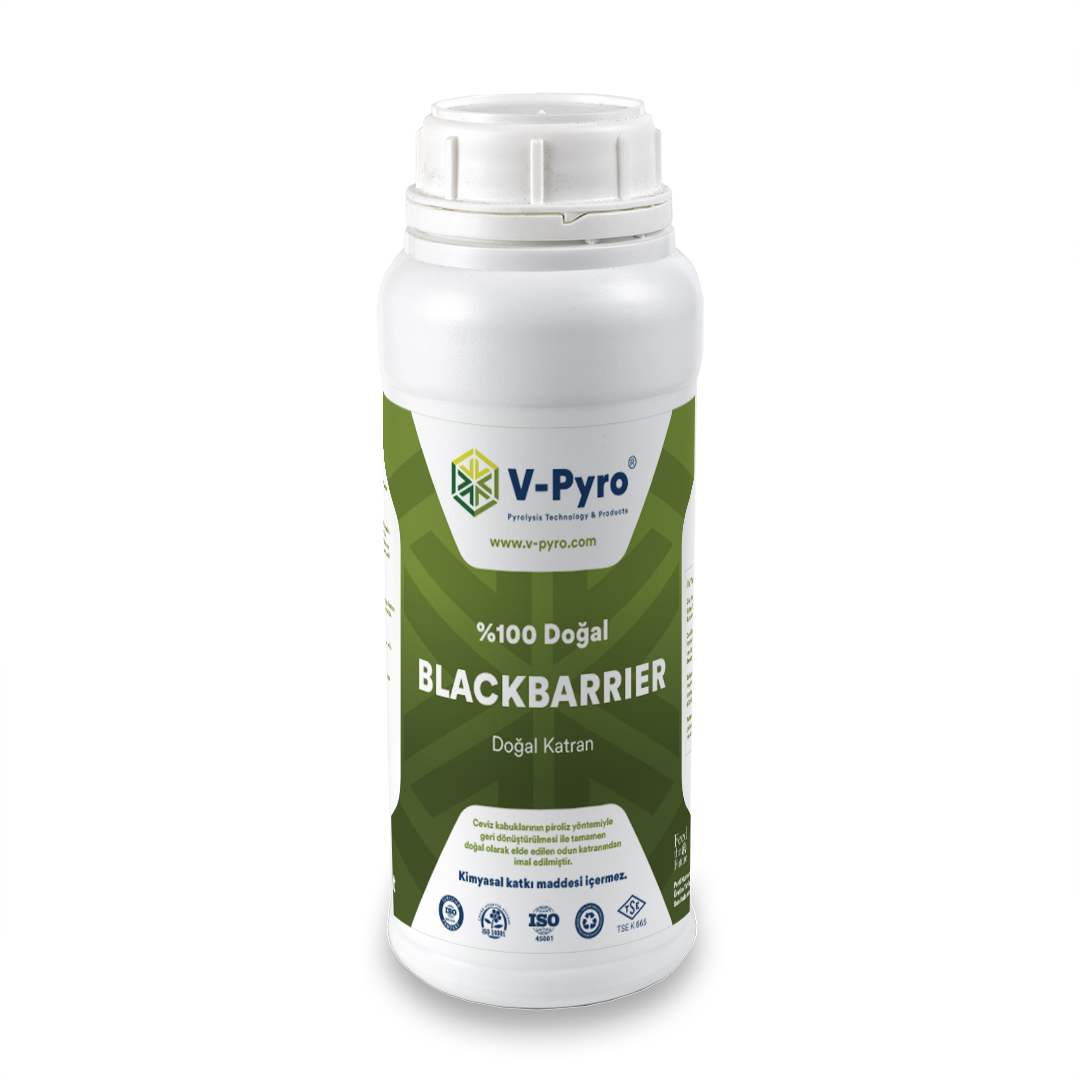
V-PYRO BLACKBARRIER 1L
1 L
₺ 1.500,00
Select Size
1 L 5 L 20 LV-PYRO BLACKBARRIER
Product Description:
V-PYRO Wood Tar is a 100% natural, viscous, dark-colored liquid with a distinctive odor, obtained through pyrolysis of organic agricultural waste (such as olive pits, walnut shells, apricot kernels, etc.). It is used to provide both physical protection and biological resistance on wood and metal surfaces. It is an eco-friendly alternative to chemical-based surface protectants.
Qualitative Composition (Ingredient List):
| Component Group | Constituent | Function |
|---|---|---|
| Aromatic Hydrocarbons | Naphthalene, Anthracene (trace) | Penetrates wood; insect-repellent effect |
| Phenolic Compounds | Guaiacol, Cresol, Phenol (2–5%) | Antiseptic and antifungal properties |
| Organic Acids | Acetic acid, Formic acid (trace) | Mildly acidic – microbial suppression |
| High Molecular Weight Resins | Polyaromatic fractions | Coating, water repellency, long-term protection |
| Volatile Organic Compounds | Esters, ketones (<0.5%) | Odor carrier, contributes to faster drying |
Quantitative Composition (Percentage Breakdown):
| Component | Percentage (%) |
|---|---|
| Resinous Fraction | 60–70 |
| Phenolic Compounds | 2–5 |
| Volatile Compounds | <0.5 |
| Organic Acids | 0.5–1.5 |
| Water (natural moisture) | <5 |
Applications:
- Wood Preservative: Fences, barns, vineyard houses, and agricultural structures
- Metal Protector: Storage tanks, structural profiles, agricultural machinery
- Insect Repellent: A natural deterrent against woodworms, moths, termites, etc.
- Anti-Corrosion: Forms a protective film on metal surfaces, especially in humid or marine environments
- Water Repellency: Enhances durability against outdoor weather conditions
- Marine Vessels: Used on the underwater hulls of boats, dinghies, and fishing vessels as a biological protective coating against barnacles, algae, and marine borers. Creates a traditional, natural anti-fouling layer especially for wooden boats.
Application Method:
- Application tools: Brush, roller, or spray. Surfaces should be clean and dry prior to application.
- Drying time: 24–72 hours depending on air circulation
- Application frequency: Every 2–3 years on wood; annual inspection recommended for metal surfaces
- Dilution: Can be diluted with solvents at a rate of 10–15% if necessary
Scientific Basis:
The phenolic and aromatic compounds in wood tar deeply penetrate surfaces, providing both waterproofing and biological protection. Studies have shown that these natural tars exhibit anti-fouling effects against marine organisms (Kakuta et al., 2020), helping prevent biofouling on submerged surfaces. Additionally, it serves as a non-toxic yet effective insect control solution for agricultural structures.